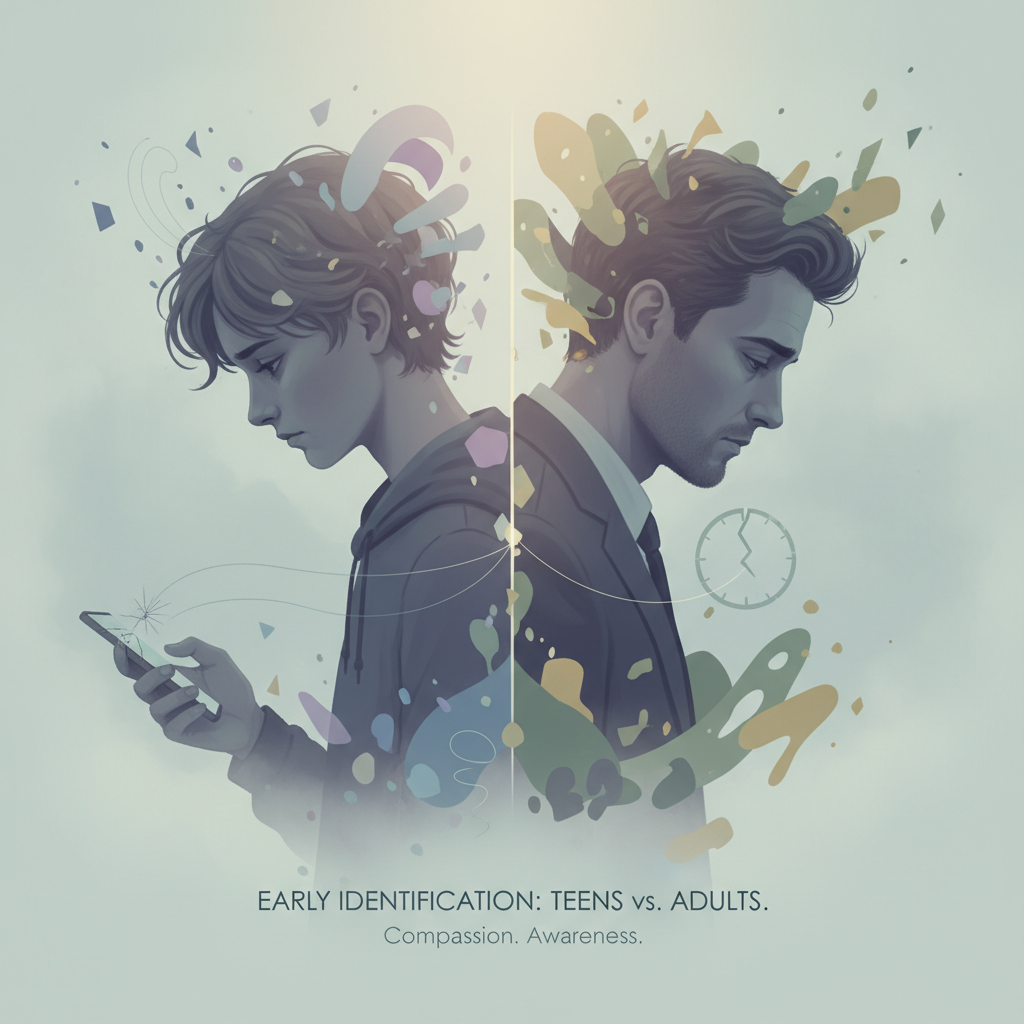
Depression symptoms in teens vs adults can look surprisingly different, even when the underlying condition is the same. Understanding these age-based differences helps you decide whether what you are seeing is typical for the stage of life or a sign that your teen, young adult, or you yourself may need support.
You might notice irritability, sleep problems, or withdrawing from friends and wonder if it is normal stress or a developing mood disorder. By learning how depression shows up emotionally, behaviorally, and physically at different ages, you are better prepared to recognize early warning signs and seek timely care.
Why depression looks different by age
Depression affects people of all ages, but your brain, body, and social world change significantly between adolescence and adulthood. These changes influence how symptoms appear, what you talk about, and what you are able to recognize in yourself.
Adolescents are still developing emotional regulation, identity, and social skills. They may not have the words to describe sadness or emptiness, so depression often comes out as irritability, acting out, or physical complaints. Experts at Mayo Clinic note that while adults often show a classic depressed mood, teens more often appear irritable, cranky, and withdrawn from others, which can easily be mistaken for typical teenage behavior [1].
Adults generally have more insight into their internal states and may report low mood, loss of interest, or difficulty concentrating more directly. They are also more likely to have recurring depression, which can shape how symptoms show up over time [2].
Understanding these developmental differences is the foundation for recognizing how age impacts mental health symptoms and for spotting problems early.
Emotional symptoms in teens vs adults
Emotional changes are central to depression, but they do not always look like sadness. The specific emotional pattern often shifts from adolescence to adulthood.
How emotions show up in depressed teens
In teens, you will often see moodiness and reactivity more than quiet sadness. According to Mayo Clinic, a key difference is that teens may look angry or irritable rather than overtly sad [1].
Common emotional depression symptoms in teens include:
- Irritability or crankiness most days, often over small things
- Feeling easily annoyed or “set off” by parents, teachers, or siblings
- Mood swings that seem more intense or longer lasting than usual for them
- Heightened sensitivity to rejection and criticism
- Feelings of worthlessness, guilt, or being a burden, which they may express as “Everyone would be better off without me”
- Emotional numbness or feeling empty but struggling to put it into words
Depressed adolescents often still react strongly to friendships and social situations, even when they are withdrawing at home. They may pull away from family while staying attached to certain peers, which can be confusing if you are trying to decide when teen behavior is more than normal.
How emotions show up in depressed adults
Adults with depression are more likely to describe a persistent low mood and loss of pleasure. Research comparing adults and adolescents with major depressive disorder found that anhedonia, the loss of interest or enjoyment in activities, is more common in adults than in teens [2].
You might notice in adults:
- A sustained, flat low mood that lasts most of the day, nearly every day
- Reduced pleasure in hobbies, relationships, work, or activities they once enjoyed
- Hopelessness about the future and a sense that nothing will improve
- Strong self-criticism, shame, or feeling like a failure
- Emotional withdrawal and less visible reactivity, even to good news
- Anxiety and rumination that blend with depressive feelings
Adults may still become irritable, but they are more likely to describe feeling empty, joyless, or disconnected. These patterns are explored further in resources on adult mental health warning signs.
Emotional regulation differences
The way you process and respond to emotions also shifts with age. Teens are still developing the brain systems that regulate strong feelings, so outbursts, impulsive reactions, and dramatic shifts are more common. Adults typically show more internalized distress and less visible chaos, even when they feel overwhelmed.
If you want a deeper dive on this, you can explore emotional dysregulation in teens vs adults and how it shapes both depression and anxiety.
Behavioral and social changes by age
Behavior changes are often the first thing you notice at home or work. These shifts can be the clearest clues that depression is present, especially when words are limited.
Behavior changes in depressed teens
For teens, behavior and performance often change before they can say they feel depressed. Mayo Clinic highlights that major red flags include withdrawal from friends, declining grades, trouble managing daily tasks, persistent fatigue, and sleep or eating changes [1].
You might see:
- Pulling away from family, spending more time alone in their room
- Losing interest in sports, clubs, or activities they once enjoyed
- A drop in grades or missed assignments, even if they used to be responsible
- Skipping school or suddenly resisting going to class
- Changes in friend groups, often moving toward peers who are also struggling
- Increased conflict at home, arguing about small issues that escalate quickly
- Risky behaviors such as substance use, reckless driving, or unsafe sex
- Non suicidal self injury, such as cutting or burning, which often emerges in adolescence with depression [3]
These patterns are covered in more detail in behavioral changes in teenage mental health and how to recognize mental health issues in teens. When shifts are persistent and represent a clear change from their usual behavior, they are more likely to be signs of depression than typical teenage ups and downs.
Behavior changes in depressed adults
In adults, behavior changes often show up around work, relationships, and responsibilities. They may still meet basic expectations, which can make depression harder to spot, but the cost is often high.
Common patterns include:
- Reduced productivity or frequent mistakes at work
- Calling in sick more often, or arriving late and leaving early
- Social withdrawal from friends, less engagement with family, or canceling plans
- Neglecting household tasks, finances, or personal care
- Increased use of alcohol or drugs to cope with feelings
- Loss of interest in sex or intimacy
- Less patience with children or partners, leading to more conflict
These warning signs overlap with those described in mental health red flags in young adults and signs of serious mental illness in adults. For many adults, the shift is subtle and gradual, but over time it can significantly affect functioning and quality of life.
Social world and identity factors
Teens and adults also live in different social worlds. Adolescents are deeply focused on peer acceptance, identity exploration, and school performance. Depression may show up most obviously where those pressures are highest.
Adults juggle work, relationships, parenting, and finances. When depression hits, they may feel overwhelmed by responsibility and deeply ashamed of perceived failures. This can make it harder to ask for help, even when symptoms are severe.
Recognizing these contextual differences is key to understanding teen mental health vs adult mental health differences as a whole, not just in terms of symptom checklists.
Physical and “vegetative” symptoms
Physical and bodily changes are often overlooked, yet they can be strong indicators of depression, especially in young people.
A 2018 study comparing adolescents and adults with major depressive disorder found that vegetative symptoms, such as appetite and weight changes, loss of energy, and insomnia, were more common in adolescents than in adults [2]. Researchers also identified a distinct vegetative symptom profile that appeared only in adolescent depression, suggesting real age based differences in how depression affects the body.
Physical symptoms in depressed teens
In teens, depression often shows itself through the body:
- Noticeable fatigue or low energy, even without major physical illness
- Difficulty waking up, frequent napping, or oversleeping
- Trouble falling or staying asleep
- Appetite changes, including eating much more or much less
- Weight changes, including failing to gain weight appropriately or gaining excess weight, rather than classic weight loss seen in adults [1]
- Unexplained headaches, stomachaches, or general physical complaints without clear medical cause [3]
These neurovegetative symptoms are common in adolescent depression [3] and can easily be missed or attributed to school stress, growth, or sleep habits. If you are watching for early signs of mental illness in teenagers, pay attention to clusters of physical symptoms that persist for weeks.
Physical symptoms in depressed adults
Adults also experience physical changes with depression, but the pattern can differ:
- Chronic low energy and fatigue that does not improve with rest
- Insomnia or early morning waking, or in some cases excessive sleeping
- Decreased appetite and weight loss are more typical in adults, though not universal [1]
- Increased aches and pains, such as back pain or joint pain, with no clear medical explanation
- Slowed movements or speech, or on the other end, feeling physically restless
The 2018 study suggests that adults show more psychological symptoms like loss of interest and concentration problems, while teens show more physical or vegetative disturbances [2]. This is one reason depression in adults sometimes goes unnoticed until functioning at work or home starts to decline.
Cognitive and school or work impacts
Depression affects how you think, focus, and make decisions. These cognitive changes can look different in a high school classroom compared to a workplace.
Cognitive and academic effects in teens
In adolescents, cognitive symptoms often appear as school problems. You might see:
- Difficulty concentrating or paying attention in class
- Forgetting assignments or due dates, even if they used to be organized
- Slower thinking or feeling mentally “foggy”
- Trouble making decisions, for example, choosing classes or activities
- A noticeable decline in grades that is not explained by a harder course load
Teens may describe this as “my brain just does not work anymore” or “I just cannot focus.” These patterns matter when you are trying to distinguish early mental health symptoms in young adults and older teens from normal stress or adjustment.
Cognitive and work impacts in adults
In adults, cognitive symptoms often affect job performance, parenting, and daily responsibilities. Research indicates that concentration problems are more prevalent in adults with major depression than in adolescents, highlighting a shift toward more cognitive disruption with age [2].
You may notice:
- Low concentration and frequent mental “blankness” at work
- Difficulty planning, organizing, or completing tasks
- Slower decision making, second guessing choices, or avoiding decisions
- Forgetfulness around bills, appointments, or commitments
- Feeling mentally exhausted after simple tasks
These patterns can be part of broader signs of serious mental illness in adults, especially when combined with mood and physical changes.
Comparing teen and adult patterns
Below is a brief comparison that highlights some of the key cognitive and functional differences:
| Area | Depressed teens | Depressed adults |
|---|---|---|
| Main setting | School and home | Work, home, relationships |
| Common complaint | “I cannot focus in class” | “I cannot think clearly at work” |
| Academic or job impact | Falling grades, missed assignments | Reduced productivity, more errors |
| Decision making | Struggles with choices about friends, school | Difficulty making life, financial, or work decisions |
For more detail on how symptoms evolve across development, you can explore how symptoms evolve from teen to adult and identifying mental illness across age groups.
Risk behaviors and self harm
Both teens and adults with depression are at increased risk for self harm and suicidal thoughts. However, the patterns and warning signs can look different at each age.
Risk behaviors in depressed teens
Adolescents often show distress through actions rather than words. According to Psychiatry Redefined, depression in adolescents is frequently accompanied by:
- Heightened irritability and unexplained anger
- Mood swings and social withdrawal from family, though they may still see close friends
- Non suicidal self injury, such as cutting or burning
- Suicidal thoughts and behaviors emerging for the first time during adolescence [3]
You may also notice increased risk taking, substance use, or involvement in unsafe situations. These behaviors can be part of broader mood disorders as outlined in warning signs of mood disorders by age.
Risk behaviors in depressed adults
Adults with depression may also engage in self harm or suicidal behavior, but they are more likely to:
- Use alcohol or drugs regularly to manage emotions
- Engage in dangerous driving or other risky activities
- Express hopelessness or talk about feeling like a burden
- Make preparations, such as giving away possessions or writing a will
In both age groups, any talk of wanting to die, self harm, or feeling that life is not worth living should be taken seriously and addressed immediately with professional support or emergency services.
Untreated depression in adolescence is linked with higher risks of adult anxiety, substance use disorders, overall poor health, and problems in social and legal functioning. Engaging in mental health care has been shown to protect against these long term outcomes [3]. Early identification is critical.
Long term patterns and development
Depression does not exist in isolation. It interacts with brain development, life experiences, and previous episodes of illness.
The 2018 study on adolescents and adults with major depression suggested that teenagers and adults may have different underlying mechanisms, with adolescents showing more physical or vegetative disturbances and adults showing more psychological symptoms like anhedonia and concentration problems [2]. Adolescent cases in the study were more likely to be first onset, while adult cases were often recurrences, which may also affect how symptoms cluster over time.
Rates of depression in United States adolescents rose from 8.1 percent in 2009 to almost 15.8 percent in 2019 [3]. This increase underscores the importance of recognizing early signs of mental illness in teenagers and intervening before patterns become entrenched.
Understanding these developmental trajectories is part of the broader picture of mental health development stages explained and difference between teen and adult mental health symptoms. What begins as subtle changes in sleep or mood in a middle school student can evolve into more classic depressive episodes in adulthood if left unaddressed.
When to seek help and what treatment looks like
If you notice a combination of mood, behavior, physical, and thinking changes lasting more than two weeks, it is time to consider a professional evaluation. It is especially important to act if:
- Symptoms are getting worse instead of improving
- Daily functioning at school, work, or home is significantly affected
- There are any signs of self harm or suicidal thoughts
Mayo Clinic experts emphasize that treatment options are effective for both adolescents and adults. Dr. Marcie Billings notes that adolescent depression can be treated extremely well today, and starting with a primary care provider is often a helpful first step [1].
Treatment may include:
- Evidence based therapies like cognitive behavioral therapy or interpersonal therapy
- Family based interventions for teens to address communication and support at home
- Medication when indicated, monitored carefully by a qualified professional
- School supports, workplace accommodations, or lifestyle changes
If you are comparing mental health symptoms in adults vs adolescents or looking at how to recognize mental health issues in teens, it is helpful to remember that you do not have to be certain it is depression before seeking help. Evaluation is part of the process.
Putting it all together
Understanding depression symptoms in teens vs adults helps you move from confusion to clarity. In teens, depression more often appears as irritability, behavior changes, vegetative symptoms like sleep and appetite shifts, and school problems. In adults, it more often shows up as persistent low mood, loss of interest, cognitive difficulties, and changes in functioning at work and in relationships.
Resources such as teen mental health vs adult mental health differences, how age impacts mental health symptoms, and how anxiety shows up differently in teens can deepen your understanding across conditions, not just depression.
If you are noticing changes in yourself, your teen, or a loved one and are wondering whether these are normal or concerning, it is appropriate to reach out. Professional support can clarify what is happening, provide guidance, and connect you with treatment options that are well matched to the person’s age, stage of life, and specific symptoms. Early recognition is one of the most powerful tools you have in protecting long term mental health.