
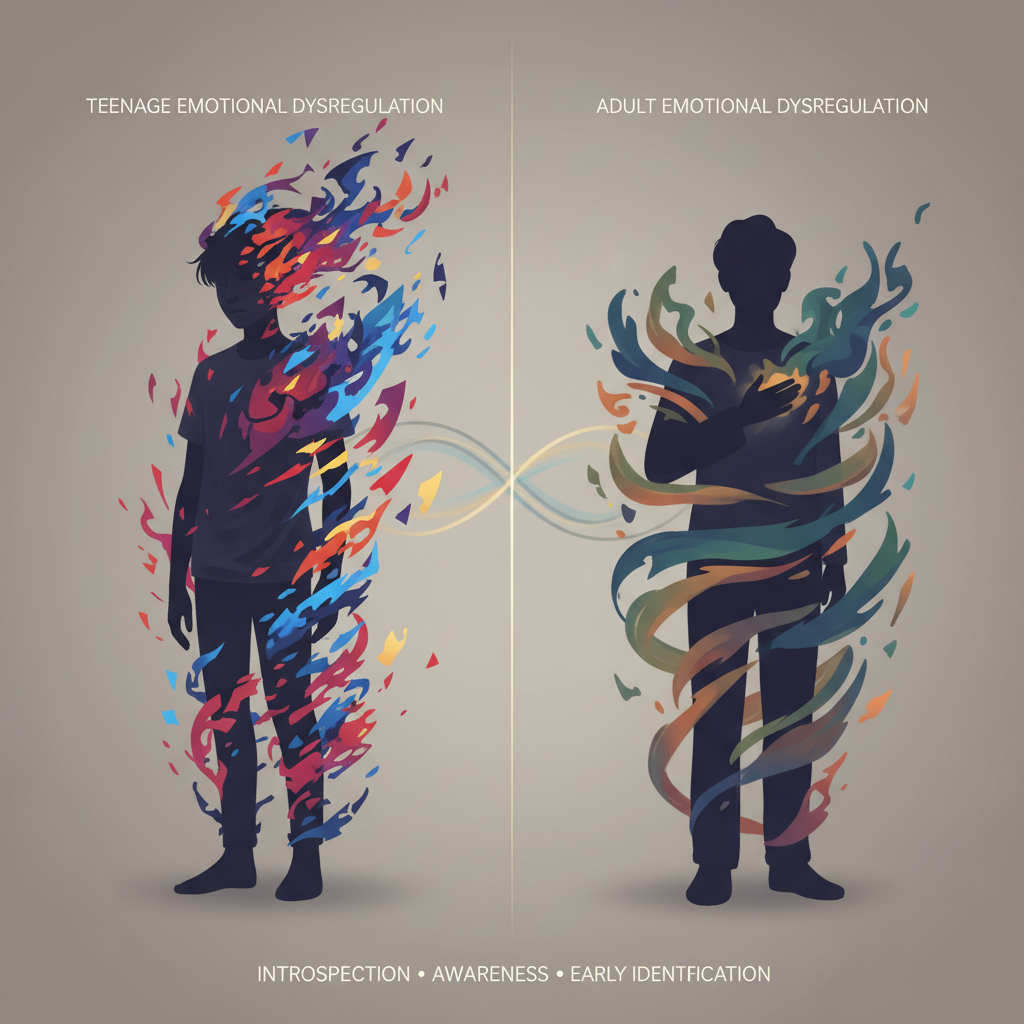
What emotional dysregulation means
Emotional dysregulation means having a hard time managing strong feelings in a way that fits the situation. You might see big reactions to small triggers, mood swings that feel out of proportion, or difficulty calming down once upset.
Most children have tantrums as they learn to manage emotions. Over time, they typically develop better skills and the outbursts decrease. When emotional dysregulation continues into the teen years or adulthood, it can signal that emotional regulation skills did not fully develop or that something is disrupting the brain’s ability to use those skills effectively, such as trauma or a mental health condition [1].
You see emotional dysregulation in many conditions, including ADHD, mood disorders, anxiety, PTSD, and personality disorders. It can also show up without a clear diagnosis. Understanding how emotional dysregulation in teens vs adults typically looks can help you decide when to seek support and what kind of help might fit best.
Why emotional dysregulation looks different by age
You cannot interpret emotional dysregulation in a teen the same way you interpret it in a 40 year old. Brain development, life experience, and social expectations all shape how people express and manage emotions.
During adolescence, key brain regions for planning, impulse control, and emotional regulation are still developing. Research shows that while emotional reactivity to negative images does not change much from age 10 to 23, the ability to regulate those emotions improves steadily from about age 10 through late adolescence, then levels off in adulthood [2]. That means teens often feel emotions as intensely as adults, but they have fewer tools and less brain maturity to manage them.
Studies with children and adolescents also show that older teens use more emotional regulation strategies than younger children, such as planning and problem solving, although they may also struggle with unhelpful patterns like self-blame [3]. So a 15 year old may have more skills than a 10 year old, but still be working hard to apply those skills consistently, especially in social situations and under stress.
In adults, the brain systems for regulation are more mature. When you see a pattern of severe emotional dysregulation, you are more likely looking at the impact of long-standing skill gaps, unresolved trauma, active mental health conditions, or physical brain problems that affect how brain regions communicate [1].
Understanding these developmental differences provides context for comparing emotional dysregulation in teens vs adults and for recognizing when behavior is typical for the age and when it may point to deeper concerns. If you want a broader view of age-related patterns, you can also explore how teen mental health vs adult mental health differences typically show up.
How emotional dysregulation appears in teens
In teenagers, emotional dysregulation often looks intense, fast, and outwardly dramatic. It is easy to label it as “just hormones” or “normal teenage moodiness.” Sometimes it is. Other times it points to a pattern that deserves attention.
Common emotional signs in teens
When emotional dysregulation is present, you may notice:
- Frequent, rapid mood swings during a single day
- Intense anger, sadness, or anxiety that seems to come “out of nowhere”
- Emotional reactions that seem much bigger than the situation
- Trouble calming down after getting upset, even with support
- Feeling either “all good” or “all bad” about themselves or others, with little in between
Bright Path notes that when dysregulation goes beyond typical teenage ups and downs, you often see emotional responses that are more unpredictable, more intense, and more impairing than what you would expect for the situation [4].
Younger adolescents, especially those who are highly sensitive to rejection, may be particularly challenged when emotions are triggered by social situations. Research indicates that adolescents around 10 to 16 have a harder time regulating emotional responses to social threats, such as perceived rejection or exclusion, compared with non-social triggers, and that this difficulty is stronger for teens with high rejection sensitivity [2].
Behavioral patterns that signal a problem
Emotional dysregulation in teens rarely stays emotional only. It often shows up in behavior:
- Sudden yelling, slamming doors, or breaking things during conflict
- Running away from difficult conversations
- Risky behaviors when upset, such as unsafe driving or substance use
- Self-harm, like cutting or burning
- Threats of suicide or dramatic statements like “everyone would be better off if I disappeared”
Research in child and adolescent psychiatric settings shows that emotional dysregulation is strongly linked to self-injurious behavior in teens, especially in crisis and emergency situations [4]. Another large study of young people found particularly high rates of self-harm, disordered eating, and substance misuse among 16 to 25 year olds with bipolar disorder, which signals very severe dysregulation in that group [5].
These behaviors go beyond typical “acting out.” They are warning signs that regulation skills are overwhelmed and that you may need to look closely at broader behavioral changes in teenage mental health.
Cognitive patterns and thinking styles in teens
Teens with emotional dysregulation often struggle with how they think about themselves and situations:
- All-or-nothing thinking, such as “If I fail this, I am a failure”
- Strong fear of rejection and intense distress at perceived criticism
- Rumination, which is going over the same upsetting thought repeatedly
- Difficulty shifting attention away from negative thoughts
In one study, adolescent girls tended to use more emotional regulation strategies overall than boys, including adaptive methods like seeking support, but they also showed more rumination, which can keep emotions stuck [3]. That mix of adaptive and maladaptive thinking patterns is common in many teens, not only girls.
If you are unsure whether what you are seeing in a teen is typical or a red flag, it may help to review how to recognize mental health issues in teens and when teen behavior is more than normal.
How emotional dysregulation appears in adults
Emotional dysregulation in adults can be easier to hide, but its effects can be more far reaching. You might not see the same door slamming or visible outbursts that you see in teens. Instead, adults may show chronic patterns that quietly erode work performance, relationships, and health.
Emotional signs in adults
Adults with emotional dysregulation may:
- Feel “on edge” much of the time
- Experience sudden waves of anger, shame, or sadness
- Have trouble letting go of grudges or old hurts
- Feel overwhelmed by stress that others seem to handle
- Struggle with guilt or self-loathing after intense emotions
Emotional dysregulation in adults can arise from skills that never fully developed, but it can also begin later in life. Trauma, mental health conditions, or brain conditions such as injuries, strokes, or neurodegenerative diseases can all disrupt how brain areas communicate and can make it much harder to apply previously learned emotion regulation strategies, especially under stress [1].
Adults with ADHD often report intense emotions and especially strong reactions to perceived rejection or criticism. This pattern, sometimes referred to as rejection sensitive dysphoria, is not its own official diagnosis but reflects very painful emotional responses to real or imagined rejection [1].
Behavioral patterns in adults
Adult behavior linked to emotional dysregulation may look less dramatic but more chronic:
- Explosive arguments in relationships, followed by remorse
- Impulsive spending, substance use, or gambling when upset
- Quitting jobs or abruptly ending relationships after conflict
- Avoiding situations that might trigger strong emotions
- Chronic overworking or perfectionism as a way to manage inner turmoil
In clinical practice, emotional dysregulation is recognized across many diagnoses, including bipolar disorder and emotionally unstable or borderline personality disorder. A 2024 study found that emotional dysregulation is a major driver of self-harm, disordered eating, and substance misuse across different mental health diagnoses in young people, and the authors recommend targeting dysregulation as a treatment focus rather than only treating by diagnosis labels [5].
For a broader view of patterns to watch for later in life, you can also review adult mental health warning signs and signs of serious mental illness in adults.
Cognitive patterns and thinking styles in adults
In adults, emotional dysregulation often shows up as:
- Persistent negative self-talk, such as “I always ruin everything”
- Catastrophizing, expecting the worst possible outcome
- Difficulty seeing other perspectives during conflict
- Replaying arguments or perceived failures repeatedly
- Black and white views of other people, such as quickly shifting between idealizing and devaluing someone
These thinking patterns keep emotions active. They can also be self-reinforcing, meaning the more someone thinks in these ways, the stronger and more frequent the emotional storms become.
Teens vs adults: Key differences at a glance
The table below summarizes some common ways emotional dysregulation in teens vs adults tends to differ. These are trends, not rules. Individual experiences can vary a lot.
| Area | Teens | Adults |
|---|---|---|
| Brain development | Regulation systems still maturing, skills growing quickly | Regulation systems mature, problems often tied to conditions, trauma, or long-standing patterns |
| Emotional expression | More visible, dramatic, and fast-shifting | Sometimes more contained on the outside, but intense internally |
| Triggers | Social rejection, peer conflict, academic pressure, family rules | Work stress, relationships, parenting, finances, health and unresolved childhood issues |
| Behavior | Outbursts, defiance, risk taking, self-harm, sudden changes in friends or interests | Chronic conflict, job or relationship instability, substance misuse, avoidant or perfectionistic coping |
| Insight | Often limited awareness of patterns and impact on others | May have some awareness but feel “stuck” or ashamed, or may deny the problem |
| Typical interpretation | Easily dismissed as “typical teen behavior” | Easily misread as “personality” or “just stress” |
If you want to understand broader age-related symptom patterns beyond emotional dysregulation, it can be helpful to look at mental health symptoms in adults vs adolescents and how age impacts mental health symptoms.
When teen dysregulation is more than normal
Some emotional volatility is healthy in adolescence. The key questions are: How intense is it, how often does it happen, and how much does it interfere with daily life?
You might be looking at more than typical teen development if you notice:
- Emotional storms that last for hours or days and happen several times a week
- Persistent withdrawal from friends, activities, or school
- Drop in grades, missing school, or loss of motivation
- Increased risk taking, including substance use, unsafe sex, or dangerous stunts
- Self-harm, disordered eating, or talk of suicide
- Severe anxiety about everyday situations or separation from caregivers
Studies suggest that emotional dysregulation is very common among youths seen in psychiatric settings, affecting roughly a quarter to a third of children in these clinics [4]. It is also closely tied to anxiety, depression, and self-injury in adolescents, and it can increase the risk of developing anxiety disorders over time [4].
If you are unsure whether what you see is an early warning sign, resources like early signs of mental illness in teenagers and recognizing emotional distress in teens can guide your observations.
When adult dysregulation signals deeper concerns
Adults are often expected to have “grown out of” big emotions. When they have not, it is rarely due to lack of willpower. Instead, the emotional system might be overburdened or under-supported.
Adult emotional dysregulation deserves closer attention when you see:
- Repeated crises in relationships that follow a familiar pattern
- Job loss, financial trouble, or legal issues related to emotional reactions
- Ongoing substance use, gambling, or other compulsive behaviors to escape feelings
- Periods of very high energy, risky choices, or little need for sleep, followed by crashes
- Long-standing emptiness, chronic shame, or thoughts of not wanting to live
Young adults are at particular risk because they are often living more independently but still working out regulation skills. You can learn more about common patterns in this age group in mental health red flags in young adults and early mental health symptoms in young adults.
When you see lasting patterns of emotional dysregulation in an adult, it may be part of a mood disorder, personality disorder, trauma-related condition, or neurodevelopmental condition such as ADHD. The specific diagnosis matters for treatment, but in all cases, improving emotional regulation skills is a key therapeutic target [5].
How emotional dysregulation can evolve from teen to adult
For some people, emotional dysregulation that starts in childhood or adolescence gradually improves as the brain matures and life skills increase. For others, it continues and becomes embedded in adult patterns.
Research suggests that emotion regulation abilities improve steadily throughout adolescence, particularly in using strategies like cognitive reappraisal, which means reinterpreting a situation to change its emotional impact [2]. However, when teens do not have enough support, or when they are dealing with conditions like ADHD, depression, PTSD, or bipolar disorder, the growth in regulation skills can lag behind.
Bright Path notes that some teens continue to struggle with dysregulation into adulthood, especially when underlying mental health conditions are present [4]. Similarly, Cleveland Clinic points out that emotional dysregulation can persist from childhood or emerge later due to trauma or brain changes [1].
Understanding this trajectory can help you see patterns over time, rather than treating each episode as separate. If you are interested in the broader developmental path, you might find how symptoms evolve from teen to adult and mental health development stages explained useful.
What you can do if you notice emotional dysregulation
Whether you are concerned about a teen, a young adult, or yourself, there are concrete steps you can take. Emotional dysregulation is treatable. Skills can be learned at any age.
Start with observation and gentle conversation
Begin by calmly noticing patterns:
- When are the intense emotions most likely to happen?
- What seems to trigger them?
- How long do they last?
- What tends to make them better or worse?
Share what you observe in nonjudgmental language. For a teen, you might say, “I notice that when plans change suddenly, it feels really overwhelming for you, and things escalate quickly. Can we talk about what that is like for you and how I can support you differently?”
For an adult partner or for yourself, similar language applies. The goal is to recognize the pattern without criticism, which lowers defensiveness and opens the door to change.
Seek a professional evaluation
If emotional dysregulation is frequent, intense, or impairing school, work, or relationships, it is time to seek a professional opinion. A mental health professional can:
- Screen for anxiety, depression, ADHD, bipolar disorder, PTSD, and other conditions
- Distinguish typical development from clinical concerns
- Recommend therapies that focus directly on emotional regulation, such as dialectical behavior therapy (DBT) or other skills-based approaches
Importantly, research shows that young people with bipolar disorder, who often have severe emotional dysregulation, are under-referred for therapies like DBT, mentalization-based therapy, or schema therapy compared with those with emotionally unstable personality disorder [5]. That means you may need to advocate for treatments that explicitly target regulation skills, regardless of the specific diagnosis.
For additional context on diagnosis across the lifespan, you can review identifying mental illness across age groups and difference between teen and adult mental health symptoms.
Learn and practice regulation skills
Therapy, medication, and self-regulation tools can all help manage emotional dysregulation at any age, and early support tends to improve outcomes [1]. Some skills that are often helpful include:
- Grounding techniques, such as focusing on your senses to stay present
- Breathing exercises to calm the body’s stress response
- Cognitive strategies, like challenging catastrophic thoughts
- Problem solving and planning for known triggers
- Seeking social support in balanced ways, rather than during peak emotional storms
Adaptive strategies like problem solving and planning are used more often by adolescents than maladaptive strategies, and older teens are particularly likely to use planning, which suggests that building on these strengths can be effective for improving overall mental health.
If anxiety is a major component of the dysregulation you see, you might find it helpful to read about how anxiety shows up differently in teens. If low mood is prominent, depression symptoms in teens vs adults offers additional age-specific detail.
Putting it all together
Emotional dysregulation in teens vs adults shares a core feature, difficulty managing strong feelings, but it is shaped by development, context, and life experience. Teens often show more visible and socially driven emotional storms, while adults may show chronic, complex patterns that play out in work, relationships, and health.
In both age groups, the most important questions are:
- How intense and frequent are the emotional reactions?
- How much do they interfere with daily life?
- Are there patterns of self-harm, substance misuse, or other serious risks?
When the answer is “a lot,” it is a signal to take emotional dysregulation seriously, not as a character flaw but as a skill gap or health issue that deserves care. You do not have to know the exact diagnosis to seek help. Noticing the patterns, opening up conversation, and reaching out for professional support are powerful first steps.
References
- (Cleveland Clinic)
- (PMC – NCBI)
- (PMC)
- (Bright Path)
- (BJPsych Open)