
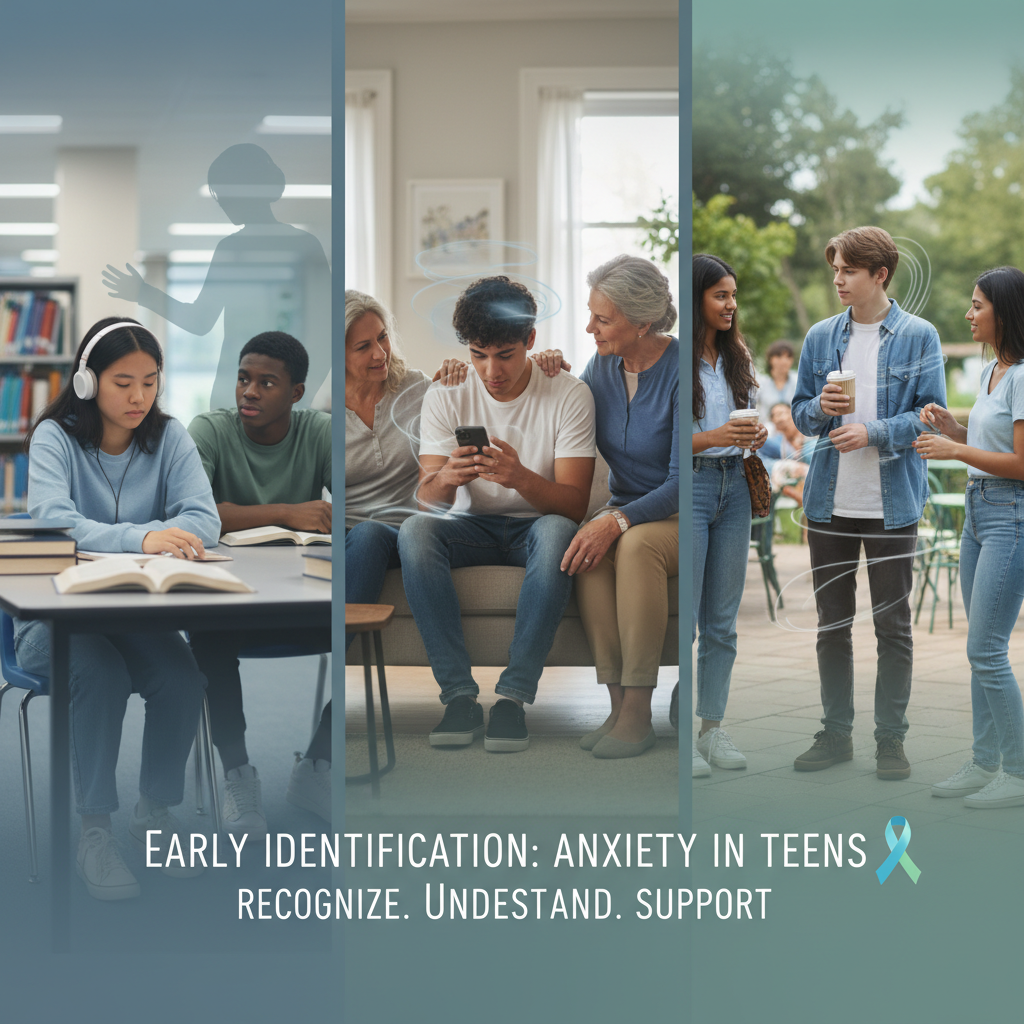
Why anxiety looks different in teens
If you are trying to understand how anxiety shows up differently in teens compared with adults, you are not alone. Anxiety disorders are the most common mental health conditions in young people, affecting an estimated 15 to 20 percent of children and adolescents, with some studies putting adolescent rates as high as 31.9 percent for ages 13 to 18 [1]. At the same time, typical teenage moods and behaviors can mimic anxiety, which makes it hard to tell when you should be concerned.
Understanding how your teen’s developing brain, hormones, and social world shape anxiety symptoms can help you recognize early warning signs and seek support sooner. This is also key to comparing teen mental health vs adult mental health differences in a realistic way, instead of assuming your teen will show the same symptoms you see in adults.
How the teen brain shapes anxiety
Anxiety in teens is not just “adult anxiety in a younger body.” The adolescent brain is wired differently, and that wiring changes how fear, stress, and worry show up.
The amygdala and emotional “volume”
In teens, the amygdala, which helps process fear and anxiety, tends to be more active and has more influence on behavior than the still-developing prefrontal cortex, which manages planning and emotional control [2]. This imbalance often means:
- Emotional reactions feel bigger and more urgent
- Decisions are more driven by feelings in the moment
- Anxiety can look dramatic, impulsive, or “over the top” to you, but feel absolutely real to them
Because the connections between the amygdala and prefrontal cortex are still maturing into the early twenties, the teenage brain is especially vulnerable to anxiety and has a harder time “turning off” alarm signals once they start [3].
Hormones, sleep, and stress sensitivity
Rising levels of estrogen and testosterone affect mood, sleep, energy, and stress response in adolescence. These hormonal shifts can intensify anxiety symptoms, especially:
- Mood swings and irritability
- Difficulty sleeping or staying asleep
- Low energy and feeling “wired but tired” [2]
On top of this, poor sleep, which is very common in teens because of early school start times and late screen use, limits emotional control and attention, and increases the risk of anxiety and depression [2]. If you notice your teen is always exhausted and increasingly anxious, sleep may be a major hidden factor.
Core ways teen anxiety differs from adult anxiety
When you compare how anxiety shows up differently in teens and adults, three areas stand out: what they worry about, how they express it, and how aware of it they are.
Different worry themes
Adults with anxiety often worry about work, finances, health, or long term responsibilities. Teens usually worry more about internal and social concerns, such as:
- Academic performance and grades
- Social acceptance and popularity
- Being judged or embarrassed
- Appearance and body image
Clinical psychologist Jerry Bubrick, PhD, notes that adolescent anxiety shifts from childhood fears of external things, like the dark or monsters, toward these internal concerns about performance, acceptance, and how they look [4].
This means a teen who appears “preoccupied with friends and social media” may actually be experiencing intense, ongoing anxiety about rejection or humiliation.
Behavioral expression rather than verbal insight
Adults are generally better at labeling and describing their anxiety and may tell you they feel “panicky,” “on edge,” or “like something bad is going to happen.” Younger teens, and even many older ones, often lack that self-awareness and vocabulary.
Instead, teens with anxiety may show you their distress through behavior:
- Avoiding school, social events, or specific classes
- Refusing activities they previously enjoyed
- Increasing irritability or frequent arguments
- Withdrawing to their rooms or screens
- Using substances, often marijuana, to calm down [4]
These behavioral shifts are easy to dismiss as “typical teenager” behavior. However, when you zoom out and see a cluster of changes, it often reflects deeper emotional distress. This is why tracking behavioral changes in teenage mental health over weeks or months is so important.
Internal distraction versus external distraction
Anxious teens may look distracted and unfocused, similar to teens with ADHD. The difference is what pulls their attention away. In anxiety, distraction comes from intrusive worries and fears. In ADHD, distraction tends to be triggered by what is happening around them.
Research notes that adolescents with anxiety often show “situational inattention” caused by internal preoccupation, rather than the more constant, stimulus-driven inattention seen in ADHD [1]. If your teen loses focus mainly in anxiety provoking situations, like tests or social settings, anxiety may be playing a larger role than you realize.
For a broader comparison of mental health symptoms in adults vs adolescents, it helps to remember that adults are more likely to say what they feel, while teens are more likely to act what they feel.
Emotional signs of anxiety that are easy to miss
Emotionally, anxiety in teens often hides behind other feelings or behaviors that you might label as attitude, moodiness, or disinterest.
Irritability and anger instead of “nervousness”
While adults often recognize anxiety as worry or fear, teens may mostly feel irritable, on edge, or quick to anger. A teen who “blows up” about small things may be living with chronic, under-recognized anxiety.
Studies of anxious youth highlight patterns such as:
- Hypervigilance to perceived threats or criticism
- Catastrophic reactions, like sudden yelling, freezing, or clinging, when they feel overwhelmed [1]
To you, this might look like overreacting or dramatics. To them, it is a desperate attempt to escape a situation that feels unbearable.
Shame, self criticism, and low confidence
Teen anxiety is often tightly linked to self image. Many anxious teens:
- Constantly worry they seem “stupid,” “awkward,” or “cringe”
- Replay conversations for hours, searching for mistakes
- Assume others are judging or laughing at them
Dr Bubrick notes that teenagers with anxiety frequently worry excessively about how they are perceived by others, which can lead to debilitating social anxiety focused on appearing incompetent or doing something embarrassing [4].
This internal criticism can steadily erode self esteem and often co-occurs with depression, leading to withdrawal and isolation [4]. If you are exploring depression symptoms in teens vs adults, watch particularly for this mix of persistent worry and growing hopelessness.
Emotional dysregulation and “overload”
Because the prefrontal cortex is still developing, teens generally have a harder time regulating intense emotions than adults. Anxiety can push them into emotional overload more quickly.
You might see:
- Sudden crying or shutdown when a task seems too hard
- Outbursts during transitions, like leaving the house or starting homework
- Freezing or going blank in stressful situations
These kinds of catastrophic reactions are context dependent and can help distinguish anxiety from mood or disruptive behavior disorders [1]. Learning about emotional dysregulation in teens vs adults can clarify whether what you are seeing fits typical development or something more serious.
Physical symptoms that are often misunderstood
Teens experience anxiety strongly in their bodies, and they may focus more on physical complaints than emotional ones. Many teens genuinely believe something is physically wrong instead of recognizing anxiety.
Common somatic signs include:
- Stomachaches, nausea, or digestive issues
- Headaches or migraines
- Muscle tension, especially in shoulders, neck, or jaw
- Rapid heartbeat, dizziness, or feeling “out of breath”
- Unexplained fatigue or trouble sleeping
Research on anxious youth points to frequent somatic complaints like headaches and stomachaches, along with muscle tension and pain, as core features of anxiety disorders in this age group [1]. Teens, who are already very aware of physical changes in their bodies, may misinterpret these signs as proof of a serious illness [5].
If your teen spends a lot of time in the nurse’s office, misses school because of physical symptoms, or repeatedly asks for medical reassurance, anxiety may be involved even if their medical workups are normal.
Social and school related signs of teen anxiety
Because peer relationships and school performance are central to adolescent life, anxiety in teens shows up clearly in these areas.
Avoidance and withdrawal
Avoidant coping is a hallmark of anxiety in young people. You may notice your teen:
- Negotiating or pleading to skip school or certain classes
- Refusing parties, clubs, or sports they used to enjoy
- Arriving late or leaving early to avoid crowds or specific people
- Spending most of their time alone or online
Studies show that anxious youth often use avoidant strategies, like crying or bargaining, to escape feared situations, and that parents sometimes accommodate this by allowing avoidance, which unintentionally reinforces anxiety [1]. Learning when teen behavior is a normal wish for independence and when teen behavior is more than normal can help you set boundaries that support healing instead of reinforcing fear.
Social media, comparison, and fear of missing out
Social media can intensify anxiety in teens by amplifying comparison and fear of exclusion. Brain imaging research shows that feelings of social exclusion activate brain regions linked to physical pain, which helps explain why online rejection feels so intense [2].
You might see:
- Constant checking of apps or messages
- Distress when they see posts of friends without them
- Obsession with how they appear in photos
- Difficulty putting the phone away even when it clearly makes them feel worse
These patterns are not just “screen addiction.” They can be signs of a teen trying to manage, or escape from, underlying anxiety about belonging and self worth.
Academic anxiety and performance issues
During the teenage years, anxiety often arises from school transitions, academic pressure, and performance expectations [6]. Anxiety can show up as:
- Test anxiety and blanking out during exams
- Overstudying with little confidence, or procrastination that leads to all nighters
- Perfectionism that makes starting assignments very hard
- Sudden drop in grades or missing work
Test anxiety is a common form of performance anxiety in teens, and strategies like focused study, visualization, adequate sleep, and relaxation techniques can help [6]. However, if your teen’s anxiety around school is persistent and significantly interferes with learning, it may signal a broader anxiety disorder.
Comparing teen and adult anxiety at a glance
The table below summarizes some of the key ways anxiety tends to appear differently in teens compared with adults.
| Aspect | Teens | Adults |
|---|---|---|
| Primary worries | Grades, friends, social status, body image, fitting in | Work, finances, health, long term responsibilities |
| Expression | Irritability, avoidance, school refusal, withdrawal, substance use | Verbal reports of worry, tension, panic, sleep issues |
| Awareness | Often feel “off,” overwhelmed, or sick but may not name anxiety | More likely to recognize and label anxiety as such |
| Triggers | Peer acceptance, social media, academic pressure, family conflict [5] | Work stress, relationships, parenting, financial strain |
| Attention issues | Situational, driven by intrusive worries | Can be present, often linked to chronic stress or coexisting conditions |
| Physical symptoms | Headaches, stomachaches, fatigue, dizziness, sleep problems [6] | Muscle tension, chest tightness, GI issues, sleep problems |
If you want to explore these patterns more broadly, you can look at how age impacts mental health symptoms and difference between teen and adult mental health symptoms as well.
When anxiety is more than typical teen stress
Feeling anxious before a test or nervous about friends is part of normal development. The difference between everyday stress and an anxiety disorder lies in intensity, duration, and impact.
According to Johns Hopkins Medicine, for most teens, anxious feelings are temporary and resolve on their own. For some, anxiety is severe or long lasting and interferes with learning, social life, and daily functioning [6].
You should pay closer attention or seek a professional opinion if your teen:
- Worries most days for weeks at a time
- Avoids school, activities, or people they used to enjoy
- Has frequent, unexplained physical complaints
- Seems constantly on edge, angry, or overwhelmed
- Uses substances to calm down or escape
- Talks about feeling hopeless, worthless, or like a burden
Anxiety in teens commonly overlaps with depression, and anxiety can gradually wear down self worth until your teen begins to withdraw and become isolated [4]. Watching for early warning signs is central to how to recognize mental health issues in teens before they progress.
If you are also caring for adults, you can compare these teen signs with adult mental health warning signs and signs of serious mental illness in adults to understand age related differences.
What helps anxious teens: next steps for you
Recognizing how anxiety shows up differently in teens is the first step. The next is deciding what to do with what you notice.
Take your observations seriously
Research shows that over 30 percent of teenagers experience an anxiety disorder that significantly interferes with life and is unlikely to improve without treatment [3]. That makes early identification critical.
You can:
- Keep a simple log of behaviors, physical complaints, and mood shifts over a few weeks
- Note when and where symptoms are worst, such as mornings, school days, or social events
- Look for patterns that match early signs of mental illness in teenagers rather than isolated incidents
This record can be very helpful if you decide to consult a pediatrician, school counselor, or mental health professional.
Involve a trusted adult beyond peers
Teens are most likely to talk about their worries with friends, but involving a trusted adult is important for getting accurate information and treatment options [2]. You can:
- Let your teen choose an adult they trust, such as a coach, teacher, relative, or counselor
- Offer to be present, or to step out, depending on what helps them feel safe
- Reinforce that anxiety is common and treatable, not a sign of weakness or failure
If your teen resists talking, you might frame the conversation around stress, sleep, or stomach problems instead of using mental health labels right away.
Explore professional support
Evidence based treatments, such as cognitive behavioral therapy and, in some cases, medications like SSRIs, can change the way the amygdala and prefrontal cortex interact, reducing amygdala reactivity and improving emotional control [3]. Treatment can help your teen:
- Understand and challenge anxious thoughts
- Face feared situations gradually rather than avoid them
- Learn coping skills for intense emotions and physical symptoms
If you are comparing mental health across ages in your family, you may also find it helpful to read about identifying mental illness across age groups, mental health development stages explained, and how symptoms evolve from teen to adult. These resources can give you a broader framework for what you are seeing.
Putting the pieces together
When you understand how anxiety shows up differently in teens, your teen’s behavior often starts to make more sense. Irritability, school refusal, stomachaches, social media drama, and hours spent alone in their room may not simply be “teen attitude.” They may be your teen’s way of trying to cope with a brain and body that feel stuck on high alert.
If you look at the full picture of emotional, behavioral, cognitive, and physical signs, you are better equipped to spot mental health red flags in young adults and adolescents early. That clarity can guide you toward compassionate conversations, appropriate limits, and timely support.
You do not need to have all the answers or decide on a diagnosis. Your role is to notice, to listen, and to reach out when patterns persist or intensify. In that sense, understanding these differences is not just about information. It is one of the most practical ways you can protect your teen’s mental health now and as they move into adulthood.