
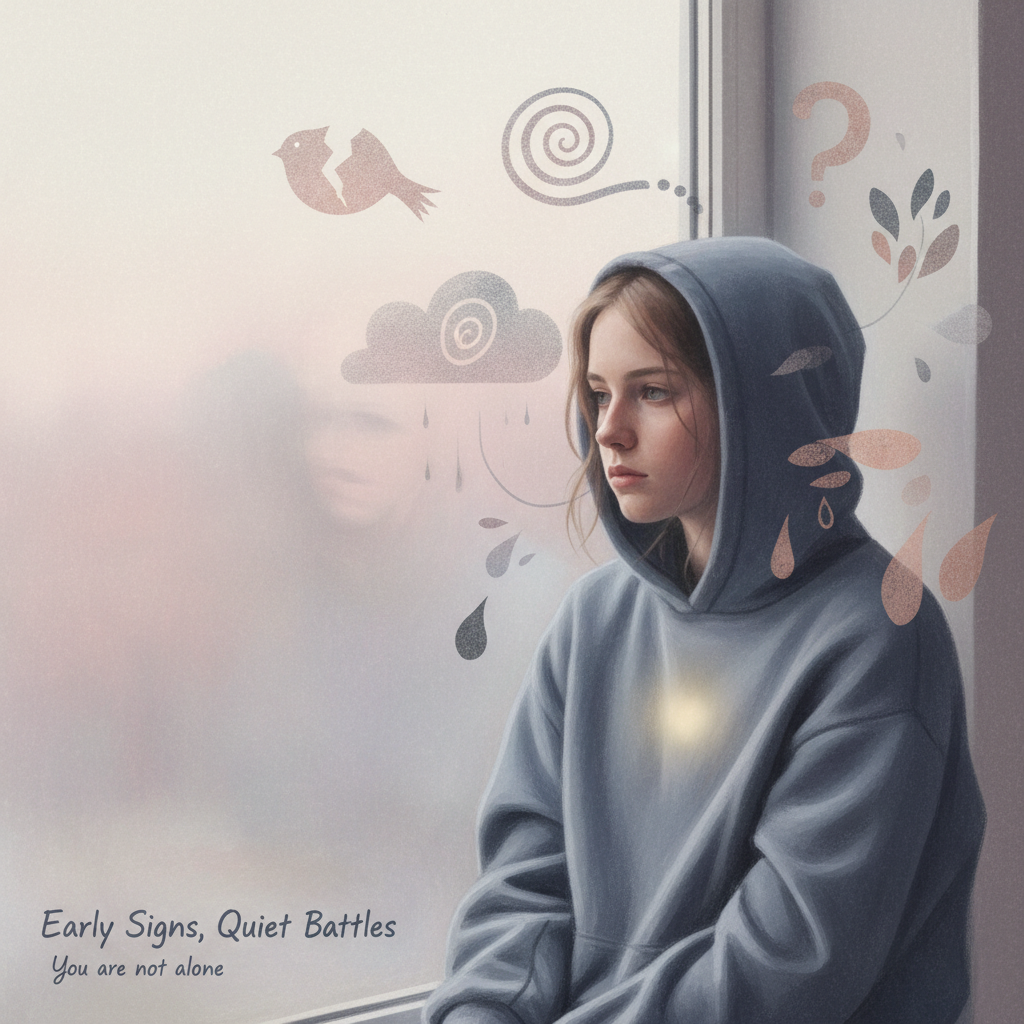
Why early signs in teenagers look different
When you try to spot early signs of mental illness in teenagers, it is easy to wonder if what you see is typical adolescence or something more serious. Hormonal shifts, a rapidly developing brain, and intense social pressure all shape how symptoms show up in teens. As a result, early warning signs can look very different from what you might expect in adults.
Globally, about one in seven adolescents aged 10 to 19 lives with a mental health condition, and many of these conditions are not recognized or treated early [1]. Learning what is typical and what may signal a concern helps you act sooner and reduces the risk that problems grow more severe over time. If you want a broader age comparison, you can also review how mental health symptoms in adults vs adolescents differ.
Normal teen behavior vs potential warning signs
Some moodiness and pull toward independence are part of healthy development. However, mental illness usually causes changes that are more intense, last longer, and interfere with daily life.
Typical teen behavior often includes short‑lived irritability, occasional conflicts at home, wanting more privacy, and changing interests. In contrast, early signs of mental illness in teenagers tend to involve:
- Noticeable, persistent changes from their usual personality or habits
- Symptoms that last at least a couple of weeks or keep returning
- Problems at school, home, or with friends that do not resolve with time
Guidance shared during World Teen Mental Wellness Day explains that behavioral changes lasting more than a couple of weeks, increasing in intensity, or disrupting everyday life may signal the need to seek professional support [2]. If you are unsure where that line is, our resource on when teen behavior is more than normal can help you compare common patterns.
Emotional changes to pay attention to
Emotional shifts are often the earliest and easiest to overlook. You may see them as “teen attitude,” but they can be key early signs of mental illness in teenagers.
Persistent sadness, hopelessness, or emptiness
Feeling sad after a breakup or disappointment is expected. Concern starts when low mood lasts most of the day, nearly every day, for a couple of weeks or more, or when it clearly affects daily life.
A sad feeling that lasts for weeks or that interferes with school, friendships, or activities can be an early sign of depression [3]. Teens might describe this as feeling:
- Numb or empty
- Hopeless or like things will never improve
- Guilty or worthless for no clear reason
Teen depression is a serious condition that impacts thoughts, feelings, and behavior and can cause emotional, functional, and physical problems if untreated [4]. To compare with adults, see how depression symptoms in teens vs adults typically differ.
Irritability and intense mood swings
Many teens are more irritable than they were as children. The key difference with mental health problems is the intensity and impact of that irritability.
Early emotional signs include:
- Irritability that seems constant or is easily triggered
- Rapid mood changes that feel extreme or unpredictable
- Anger outbursts, shouting, or crying that seem out of proportion
Irritability and mood swings are common during adolescence, but when rapid mood changes interfere with functioning at home, in school, or with peers, they may signal a more serious condition [5]. The Mayo Clinic also notes prolonged irritability and hopelessness as early signs of teen depression [4]. You can learn more about this pattern in our guide to emotional dysregulation in teens vs adults.
Heightened anxiety, fear, or worry
Anxiety often appears earlier than depression and may be one of the first warning signs. Emotional disorders, including anxiety and depression, are common in adolescents and can cause rapid mood changes, school attendance problems, and reduced social interaction [1].
Watch for:
- Persistent worry that seems hard to control
- Fears about school, social situations, or safety that limit what your teen will do
- Physical complaints like stomachaches or headaches tied to stress
Our resource on how anxiety shows up differently in teens explains why a teen’s anxiety may look more like irritability, avoidance, or perfectionism than classic adult “nervousness.”
Expressions of worthlessness or suicidal thinking
Any direct or indirect talk about self‑harm, death, or wanting to disappear needs to be taken seriously. Warning signs include:
- Saying life is pointless or others would be better off without them
- Joking about wanting to die or self‑harm
- Writing or drawing about death or suicide
Suicide is the third leading cause of death among older adolescents and young adults, and emotional distress combined with barriers to care and risk factors like substance use can raise that risk [1]. If you hear statements like these, you should seek immediate professional help. In the United States this can include calling or texting 988, contacting 911, or using local crisis services, similar to the crisis resources recommended in Marathon County, Wisconsin [2].
Behavioral changes that often signal a problem
Behavioral shifts are often the most visible early signs of mental illness in teenagers. They can also be misinterpreted as “acting out” instead of signs of distress.
Withdrawal and loss of interest
One of the clearest early indicators is when a teen pulls away from what used to matter to them. Warning signs include:
- Withdrawing from close friends or family
- Avoiding social activities they previously enjoyed
- Spending more time alone in their room or online
A loss of interest in usual activities and withdrawal from friends and family are key early signs of mental illness in teenagers, noted by pediatric experts [6]. The Mayo Clinic also highlights withdrawal and loss of interest as core early symptoms of teen depression [4].
If you want a more detailed breakdown of these patterns, see our page on behavioral changes in teenage mental health.
Changes in sleep, appetite, and energy
Mental health conditions in teens often show up through physical routines:
- Sleeping far more or far less than usual
- Struggling to fall asleep or stay asleep, or sleeping much of the day
- Noticeable weight loss or gain
- Eating far more or far less than usual
- Ongoing fatigue or low energy
Significant changes in sleep or appetite are among the key early signs of mental illness in teenagers [2]. Nemours KidsHealth notes that limiting screen time and maintaining good self‑care habits such as healthy eating, enough sleep, a steady routine, and physical activity can help manage early signs of depression [3].
Decline in school performance and motivation
School is often where problems first become visible. Red flags include:
- Dropping grades, especially in subjects your teen previously liked
- Incomplete homework, frequent absences, or tardiness
- Loss of motivation about future plans, college, or activities
Persistent academic struggles, especially in previously strong areas, and refusals to engage in activities they once enjoyed are important signs that may indicate underlying mental health concerns [6]. When these go beyond typical academic ups and downs, they may be part of a broader pattern of distress.
Risk‑taking and self‑destructive behaviors
Sometimes, early signs of mental illness in teenagers look like breaking rules rather than showing sadness or anxiety. Behavioral symptoms that can indicate deeper concerns include:
- Risky driving, unsafe sexual behavior, or stealing
- Impulsive decisions that ignore consequences
- Self‑destructive behavior, including self‑harm, burning, or cutting
- Increasing conflicts with authority figures
Mission Prep Healthcare notes that risk‑taking, impulsivity, self‑destructive behavior, and significant social or academic changes can all signal mental health concerns in teens [5]. The Georgetown Behavioral Health Institute also notes that lashing out, isolating, and making risky decisions can be early indicators of underlying mental illness, especially when persistent or extreme [7].
Cognitive and thinking changes you might notice
Mental illness during adolescence often affects how your teen thinks and processes information. These changes can be subtle at first.
Negative self‑talk and self‑image
Teens commonly worry about how they look or fit in, but persistent self‑criticism can signal anxiety or depression.
Pay attention if your teen:
- Frequently calls themselves stupid, ugly, or a failure
- Assumes others dislike them without clear evidence
- Cannot accept compliments or positive feedback
Nemours KidsHealth highlights that changes in thinking and how teens feel about themselves are early signs of depression, and these symptoms may be easy to miss without careful attention [3].
Obsessive thoughts and constant worry
Some teens experience mental illness mainly as repetitive thoughts or fears. Warning signs include:
- Replaying mistakes or perceived failures repeatedly
- Obsessing about specific goals to the point of burnout
- Persistent worries or intrusive thoughts that your teen says they cannot stop
Persistent worries, obsessive thoughts, or an intense, inflexible focus on specific goals are among the early signs of mental illness in teenagers identified by pediatric experts [6].
Difficulty concentrating and decision making
Changes in school performance may also stem from shifts in attention and thinking. You might notice:
- Trouble focusing on homework, reading, or conversations
- Forgetting instructions or assignments more than usual
- Appearing mentally “checked out” or disengaged
Emotional disorders like anxiety and depression can disrupt attention, memory, and decision making, which in turn affects school performance and social engagement [1]. Our guide to mental health development stages explained explores how these cognitive changes connect to brain development across ages.
Specific conditions that often emerge in adolescence
Several mental health conditions commonly begin or become more noticeable during the teen years. Understanding their early signs can help you seek support promptly.
Depression and mood disorders
Depression in teenagers often involves:
- Persistent sadness, emptiness, or irritability
- Loss of interest in activities
- Changes in sleep, appetite, and energy
- Feelings of worthlessness, guilt, or hopelessness
- Thoughts of death or self‑harm
Depression is more common in teens with a family history or those who have lived through stressful or traumatic events such as serious illness or parental divorce [3]. Early mood symptoms can vary in intensity but usually show up as clear changes from your teen’s previous attitude and behavior that cause significant distress at school, home, or socially [4].
You can learn more about how these symptoms may later present in adults in our overview of warning signs of mood disorders by age.
Anxiety disorders
Anxiety disorders are among the most common emotional problems in youth. They affect a significant percentage of both younger and older adolescents and often cause:
- Rapid and unexpected mood changes
- Increased school absences
- Avoidance of social situations
- Physical symptoms like headaches, stomachaches, or muscle tension
These conditions can significantly impact school attendance and social interaction [1]. Our resource on how age impacts mental health symptoms outlines how early anxiety can evolve over time.
ADHD and behavioral disorders
Behavioral disorders, such as ADHD and conduct disorder, are often identified early in adolescence. The World Health Organization notes that ADHD and conduct disorder affect a notable portion of 10 to 14 year olds and, although rates decrease in older teens, these conditions can:
- Disrupt education
- Increase the risk of conflict with rules and the law
- Contribute to risk‑taking and impulsive behavior
(WHO)
The Georgetown Behavioral Health Institute also notes that adolescence is a common period for the emergence of ADHD symptoms and sometimes more serious conditions like schizophrenia, often influenced by both environmental and genetic factors [7].
Eating disorders
Eating disorders, including anorexia nervosa and bulimia nervosa, commonly begin in adolescence, especially among girls. Early signs can include:
- Intense concern about weight, shape, or food
- Strict dieting, skipping meals, or binge eating
- Frequent bathroom trips after meals
- Rapid weight loss or fluctuations
- Excessive exercise or rigid food rules
These disorders, though less common than anxiety or depression, are linked to serious outcomes such as suicide and premature death and therefore always warrant urgent attention [1].
Substance use as a red flag
Experimentation with substances sometimes appears during adolescence, but regular or escalating use can be an early sign of underlying mental health issues.
You should be concerned if you notice:
- Frequent alcohol or drug use, not just occasional experimentation
- Misuse of prescription medications, including stimulants or painkillers
- Using substances to cope with stress, sleep, or emotions
- Combining substance use with isolation, mood changes, or school problems
The American Academy of Pediatrics reports that substance use is common among teens and often correlates with deeper emotional distress, sometimes serving as a coping mechanism [6]. Georgetown Behavioral Health Institute also highlights drug or alcohol use alongside risky decisions and other concerning behaviors as a sign that mental illness may underlie what you see [7].
You can later compare how substance‑related mental health issues may look in older populations with our guide to early mental health symptoms in young adults and mental health red flags in young adults.
How teen symptoms differ from adult symptoms
The adolescent brain is still developing, especially in areas that manage impulse control, planning, and emotional regulation. This means teens often show mental health symptoms in more external and behavior‑based ways than adults.
Compared with adults, teenagers are more likely to:
- Show irritability rather than talk about feeling sad
- Act out, withdraw, or take risks instead of saying they feel anxious
- Struggle in school before they describe internal distress
- Mask emotions from parents and express them with peers or online
Teens also may be less able or willing to name what they feel and may hide symptoms because they fear judgment or consequences. Mission Prep Healthcare notes that teens often mask emotions and that you might only notice the disruption in their functioning [5]. Georgetown Behavioral Health Institute explains that unreasoned or risky behaviors are common given brain development, but persistent or extreme versions may indicate mental illness [7].
If you want a structured comparison, see teen mental health vs adult mental health differences and the difference between teen and adult mental health symptoms. These resources build on how symptoms evolve from teen to adult as the brain and life circumstances change.
In general, the more a behavior disrupts daily life, persists over time, represents a clear change from your teen’s typical self, or clusters with other concerning signs, the more important it is to seek a professional opinion.
When to seek professional help
You do not need to wait until you are certain a mental illness is present before reaching out for support. In fact, early intervention can significantly improve outcomes for teenagers [5].
You should contact a health or mental health professional if:
- Emotional or behavioral changes last more than a couple of weeks
- Symptoms are getting worse rather than improving
- Your teen’s daily functioning at home, school, or with friends is affected
- You see signs of self‑harm, suicidal thoughts, or unsafe behavior
The Mayo Clinic advises that when depression signs persist, interfere with daily life, or raise concerns about safety, you should seek help from a family doctor, pediatrician, or a mental health professional trained to work with adolescents [4]. Nemours KidsHealth encourages teens themselves to talk with a trusted adult such as a parent, teacher, mentor, or coach when they notice early signs of depression so they feel less alone and more hopeful [3].
If you believe there is an immediate risk of self‑harm or suicide, you should seek urgent help right away. This can include calling or texting 988 in the United States, contacting 911, or using local crisis services, as recommended in current guidance for teen mental health crises [2].
Our guide on how to recognize mental health issues in teens offers practical steps for deciding when to move from concern to action.
How to support your teen day to day
You cannot control every stressor in your teen’s life, but you can make it easier for them to talk and to access help.
Create space for open, nonjudgmental conversations
Teens are more likely to share honestly when they feel safe and listened to. You can:
- Choose calm moments, not heated ones, to ask how they are
- Listen more than you speak, and avoid jumping to solutions too quickly
- Validate their feelings, even if you do not fully understand them
Open, nonjudgmental conversations at home, combined with listening and reassurance about available support, help reduce stigma and encourage teens to seek help sooner [2]. Sometimes, involving another trusted adult can help if your teen feels wary of talking with you, as suggested by Georgetown Behavioral Health Institute [7].
For additional strategies, see our resource on recognizing emotional distress in teens.
Encourage healthy routines without perfectionism
Small daily habits can help stabilize mood and stress, especially in the early stages of mental health difficulties. You can:
- Support a consistent sleep schedule and limit late‑night screen use
- Encourage regular meals and access to nutritious food
- Help them stay physically active in ways they enjoy
Nemours Kids health emphasizes that limiting screen time and maintaining healthy self‑care habits such as regular sleep, balanced nutrition, routine, and activity are important measures to manage early signs of depression [3]. Your goal is not strict control but consistent support.
Partner with professionals and schools
If you are concerned, reach out to your teen’s pediatrician or primary care provider first. They can:
- Rule out medical causes of symptoms
- Provide initial screening for mental health concerns
- Refer you to therapists, psychiatrists, or specialized programs
You can also coordinate with school counselors or psychologists, who can monitor your teen’s functioning in the classroom and help with accommodations when needed.
To understand how signs in adolescence relate to those in adulthood and across age groups, our guide to identifying mental illness across age groups provides a bigger picture that can guide your decisions.
Recognizing early signs of mental illness in teenagers is not about labeling normal struggles as illness. It is about noticing when patterns shift, persist, or interfere with daily life and then using that information to offer timely support. You do not have to navigate this alone. With careful observation, open communication, and professional guidance when needed, you can help your teen move toward safety, stability, and long‑term emotional health.