Why the difference between teen and adult mental health symptoms matters
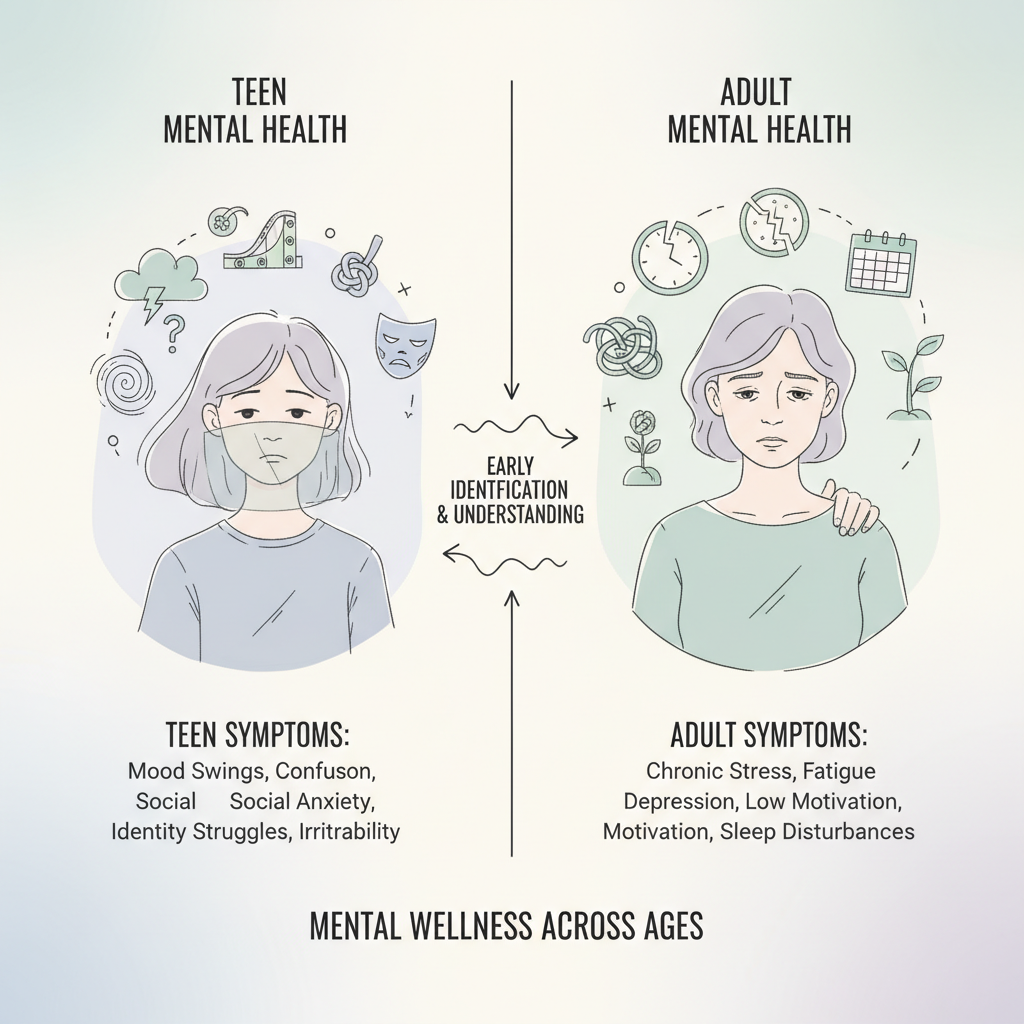
When you notice changes in mood or behavior in yourself or your child, it can be hard to know what is typical and what is a warning sign. Understanding the difference between teen and adult mental health symptoms helps you decide when to watch and wait, when to start a conversation, and when to seek professional help.
Research shows that depression and anxiety often look different in adolescents than they do in adults, even when the underlying diagnosis is the same. For example, vegetative symptoms such as appetite and weight changes, low energy, and insomnia appear more often in depressed adolescents than in adults with depression [1]. Adults, on the other hand, more often report loss of interest and concentration problems. These age-based differences can easily lead to missed or delayed diagnoses if you are not sure what to look for.
By learning how symptoms shift from the teenage years into adulthood, you give yourself a clearer framework for recognizing early problems and getting the right support. You will also see how normal developmental changes can overlap with emerging mental health concerns, which is one of the main reasons this topic feels so confusing for many families.
How age and development shape symptoms
Your brain and body do not mature all at once. Adolescence is a time of rapid physical, hormonal, social, and neurological change. Adults experience mental health issues on a very different developmental foundation.
In teens, puberty-related hormones, brain re-wiring, and social changes create volatility in attitudes, behavior, responsibility, and moods [2]. During puberty, hormones like gonadotropin-releasing hormone, luteinizing hormone, and follicle-stimulating hormone trigger both physical and emotional changes that can look a lot like mental health symptoms at first glance [3].
Adults usually have a fully developed brain, more stable roles, and long-standing coping patterns. When mental health problems appear in adulthood, they often sit on top of years of learned responses, defenses, and stressors.
You see this difference clearly in how depression presents. Adolescents are more likely to show vegetative and physical signs, such as low energy, sleep and appetite changes, and agitation, while adults more often describe classic emotional symptoms like emptiness, hopelessness, and loss of interest [1]. To explore this in more depth, you can review resources on depression symptoms in teens vs adults.
Recognizing how developmental stage shapes symptom patterns is the first step in spotting trouble early.
Emotional signs: Teens vs adults
Emotional symptoms can be the hardest to interpret. Irritability, sadness, and worry can be part of a typical response to stress or a sign of something more serious. The difference between teen and adult mental health symptoms often starts with how those emotions are expressed.
How teens often show emotional distress
Teen emotions can look big, fast, and inconsistent. Some volatility is expected in adolescence, but persistent or extreme patterns deserve attention.
In teens, depression may show up more as irritability than as visible sadness. Younger children and adolescents often appear more irritable, clingy, tearful, or frustrated rather than overtly “depressed” [4]. You might see intense reactions to criticism, mood swings, or anger that flares quickly and seems disproportionate to the situation.
Anxiety in teens often appears as irritability, frustration, and sensitivity to criticism rather than an adult-style description of “constant worry” [5]. Teens may not say “I feel anxious.” Instead, you notice they get snappy, overwhelmed, or shut down when they feel under pressure.
Typical teen emotional changes include:
- Wanting more independence and privacy
- Temporary sadness after conflicts or disappointments that resolves in days
- Occasional moodiness that still allows for joy, interest, and connection [3]
You should be more concerned when:
- Irritability or sadness lasts most of the day, most days, for more than two weeks
- Emotional reactions feel extreme and are very out of character
- There are signs of self-hatred, worthlessness, or ongoing hopelessness
Resources on recognizing emotional distress in teens and emotional dysregulation in teens vs adults can help you sort through what you are seeing.
How adults typically express emotional symptoms
Adults tend to internalize emotional distress more than teens, although everyone is different. Adults with depression more often report loss of interest, emotional numbness, and trouble concentrating rather than the physical or vegetative symptom patterns that are more common in adolescents [1].
Adults with anxiety usually describe ongoing, excessive worry about work, finances, health, and family responsibilities. They may say they feel on edge, tense, or filled with dread [5]. These worries are often persistent and feel uncontrollable.
You might notice that adults:
- Verbalize their distress as “stress,” “burnout,” or “worry”
- Downplay emotions and continue to function at work or home until they reach a breaking point
- Use unhealthy coping strategies, such as substance use or overworking, that have developed over years [6]
If you are concerned about yourself or another adult, resources on adult mental health warning signs and signs of serious mental illness in adults can give you specific markers to watch for.
Behavioral changes: What you see on the surface
Behavior is often where you first notice a problem. Here, the difference between teen and adult mental health symptoms becomes especially clear because life roles, responsibilities, and expectations are so different at each age.
Common behavioral warning signs in teens
In teens, behavioral changes are a key clue that something may be wrong. Mental health issues in adolescents often show up through actions before they are ever put into words.
Depression and anxiety in teens frequently manifest as:
- Withdrawal from friends or family
- Skipping school or refusing to attend
- A sudden drop in grades or loss of interest in activities
- Irritability, defiance, or oppositional behavior
- Risky behaviors or sudden rule-breaking
Adolescents with depression may show academic difficulties, defiant behavior, or physical complaints like headaches and stomachaches, which can be misinterpreted as “behavior problems” rather than signs of a mood disorder [4].
Anxiety in teens is also likely to appear through outward behaviors. You might see school avoidance, social withdrawal, irritability, or physical complaints such as stomachaches and headaches [7]. These symptoms are often tied to academic pressure, peer relationships, extracurricular performance, social media, or identity struggles [5].
Some behavioral shifts are part of normal adolescence. For example, it is typical for teens to:
- Spend more time with peers than with family
- Seek privacy and independence
- Experiment with new interests and identities
- Have minor episodes of risk-taking, which usually remain occasional and not extreme [3]
Behavior is more concerning when you see:
- Persistent refusal to go to school
- Ongoing social isolation from both family and friends
- Extreme risk-taking or delinquent behavior
- Self-harm or cruelty to animals, which can signal more serious problems [3]
If you are unsure whether your teen’s behavior is within a normal range, you may find it helpful to explore when teen behavior is more than normal and behavioral changes in teenage mental health.
Behavioral patterns in adults with mental health concerns
In adults, mental health problems also show through behavior, but usually against a backdrop of job demands, caregiving responsibilities, and long-term relationships.
Common signs include:
- Decline in work performance or frequent absences
- Withdrawal from social activities or family responsibilities
- Increased substance use, gambling, or other numbing behaviors
- Irritability, angry outbursts, or conflict in relationships
- Neglect of personal hygiene or daily tasks
Adult anxiety often leads to overworking, avoidance of stressful situations, or persistent reassurance-seeking. Depression can look like chronic fatigue, staying in bed, missing deadlines, or avoiding previously enjoyable activities.
Because adults can often “mask” symptoms to maintain jobs or caretaking roles, changes may appear gradual. This can make early identification harder, which is why paying attention to patterns over time is important. For further guidance, you can review mental health red flags in young adults and early mental health symptoms in young adults.
Physical and “body” symptoms across ages
Physical complaints are a major part of the difference between teen and adult mental health symptoms. Teens, in particular, often experience and communicate distress through their bodies.
How teens feel mental health in their bodies
Adolescents commonly present with physical symptoms when they are struggling emotionally. During depression, teens often have low energy, changes in appetite or weight, and sleep difficulties, which make up a specific “vegetative” symptom profile that is more common in adolescent depression than in adults [1].
Teens with anxiety frequently report:
- Stomach pain or nausea
- Headaches
- Rapid heartbeat
- Dizziness or lightheadedness
- Feeling short of breath or “shaky”
These bodily sensations are so prominent that teens may believe they have a physical illness instead of an anxiety disorder [7]. Physical changes of puberty, such as growth spurts, changes in appetite, and sleep shifts, can also mimic or mask mental health symptoms, which complicates diagnosis [6].
Because of this overlap, it is easy for you to dismiss physical complaints as “growing pains” or for medical providers to treat only the body without exploring emotional causes. Resources about early signs of mental illness in teenagers and how to recognize mental health issues in teens can offer additional context.
Physical symptoms in adults
Adults with depression and anxiety also experience physical symptoms, but these may be framed more clearly as part of emotional distress. For example, adults with anxiety commonly report muscle tension, fatigue, and sleep problems, often alongside clearly articulated worries about work, finances, health, or family responsibilities [5].
Adults with depression may struggle with appetite changes, sleep disturbance, low energy, and aches and pains. However, compared to adolescents, their symptom profile is usually less dominated by vegetative symptoms and more by emotional and cognitive changes, such as loss of pleasure and concentration problems [1].
If you notice ongoing physical symptoms in yourself or another adult and medical evaluations are inconclusive, it can be helpful to consider whether underlying mental health issues might be contributing.
Cognitive and school or work differences
How someone thinks, learns, and focuses is another area where age shapes symptom patterns.
Cognitive and academic changes in teens
Mental health problems in adolescence can interfere with the ability to concentrate, plan, and stay organized. This often appears as:
- Declining grades or missed assignments
- Difficulty focusing in class or during homework
- Forgetfulness and disorganization
- Seeming “not like themselves” academically
For depressed adolescents, concentration difficulties may be present but are less prominent than in adults. Instead, vegetative symptoms and irritability stand out more [1]. Teachers and parents may initially interpret these changes as laziness or lack of motivation, when in fact they are early warning signs of mental health issues.
Anxiety can also affect cognitive performance by making it hard for teens to think clearly during tests, speak up in class, or attend school consistently. Over time, this can interfere with important developmental milestones such as building independence, managing emotions, and forming relationships [7].
Cognitive and work functioning in adults
In adults, cognitive symptoms often show up in the workplace or in managing household responsibilities. You might see:
- Reduced productivity or missed deadlines
- Trouble making decisions
- Difficulty concentrating during meetings
- Forgetfulness about tasks, appointments, or bills
Adults with depression commonly report trouble concentrating and making decisions, sometimes more so than adolescents with depression [1]. Anxiety can lead to racing thoughts, overthinking, and difficulty shifting attention away from worries, which undermines focus and performance.
Because work offers fewer built-in monitors than school, these changes may be less visible to others at first. Supervisors, partners, or friends may notice that the person is “not themselves” at work or at home. Resources on how age impacts mental health symptoms and mental health development stages explained can show how these patterns evolve over time.
Risk behaviors, self-harm, and safety concerns
Safety is one area where you should never ignore your instincts. Here, age matters both in how risk presents and in how urgent intervention needs to be.
Unique risks in adolescents
Adolescents with depression have a higher likelihood of engaging in non-suicidal self-injury (NSSI), such as cutting or burning, and also face elevated risks of suicidal thoughts and behaviors compared to adults [4]. These behaviors are serious warning signs, not “phases.”
Other red flags in teens include:
- Extreme risk-taking or delinquent behavior
- Persistent refusal to attend school
- Severe eating pattern changes suggestive of eating disorders
- Cruelty toward animals, which can indicate serious emotional disturbance [3]
Because adolescence is already a vulnerable developmental stage, early detection and treatment are especially critical. Anxiety and depression can disrupt the development of independence, self-confidence, and relationship skills, which can have long-term consequences [7]. If you notice these signs, it is important to seek professional support right away.
Risk patterns in adults
Adults with mental health disorders may also engage in self-harm or have suicidal thoughts, but risk behaviors are more likely to involve:
- Substance misuse
- Dangerous driving
- Reckless financial decisions
- Severe neglect of health or safety
Adults often have access to means that increase risk, such as medications, vehicles, or firearms. When you see a combination of severe mood symptoms, withdrawal, and unsafe behavior in an adult, you should treat it as an urgent concern and talk with a medical or mental health professional.
To better understand how risk evolves, you can refer to resources on how symptoms evolve from teen to adult and identifying mental illness across age groups.
Comparing teen and adult symptoms side by side
The table below summarizes some of the key differences between teen and adult mental health presentations.
| Area | Teens | Adults |
|---|---|---|
| Emotional expression | Irritability, mood swings, sensitivity to criticism, visible anger | Persistent worry, low mood, numbness, described as stress or burnout |
| Depression profile | More vegetative and physical symptoms, irritability, neurovegetative changes like appetite, sleep, and energy [1] | More anhedonia and concentration problems, verbal reports of hopelessness and lack of pleasure [1] |
| Anxiety expression | Behavioral changes, school avoidance, irritability, stomachaches, headaches [7] | Internalized worry about work, finances, or family, muscle tension and sleep difficulty [5] |
| Behavior | Changes in friends, grades, school attendance, increased risk-taking or defiance | Decline in work performance, withdrawal from social roles, increased substance use |
| Physical symptoms | Strong focus on body complaints, hard to separate from puberty and growth [6] | Physical symptoms often recognized as part of stress, anxiety, or depression |
| Risk and safety | Higher rates of NSSI, suicidal thoughts, extreme school refusal, severe eating changes [4] | Substance misuse, financial or legal problems, neglect of health, self-harm or suicidality |
For a broader overview, it can be helpful to read more on teen mental health vs adult mental health differences and mental health symptoms in adults vs adolescents.
When it is probably development, and when it is not
Distinguishing normal development from a mental health problem is one of the most common challenges parents and caregivers face. You do not want to overreact, but you also do not want to miss a serious issue.
Signs that changes may be normal for teens
Teen behavior is more likely to be part of typical development if:
- Mood swings are brief and connected to specific events
- Your teen still finds joy and interest in some activities
- They maintain friendships and can confide in someone
- Sadness or anger after conflicts resolves within days or a couple of weeks
- Risk-taking is mild and not persistent or extreme [3]
Teens with strong social support, healthy activities, and no self-harming behavior are more likely experiencing puberty-related changes rather than a mental illness [2].
Signs that you should seek a professional evaluation
You should consider getting a professional mental health evaluation for a teen or adult if you notice:
- Symptoms that persist most days for more than two weeks
- Clear decline in school or work performance
- Ongoing withdrawal from friends or family
- Severe changes in sleep, appetite, or energy
- Self-harm, suicidal thoughts, or talk about wanting to die
- Extreme risk-taking, aggression, or cruelty
Teen mental health issues are often harder to identify because symptoms can resemble normal teenage moodiness and physical changes [6]. If you are unsure, it is safer to ask for a professional opinion than to wait and see. Resources like warning signs of mood disorders by age and how age impacts mental health symptoms can support this decision.
Practical steps you can take next
Knowing about the difference between teen and adult mental health symptoms is only useful if you know how to act on that knowledge. You do not need to have everything figured out before you take the next step.
Here are some practical actions you can take:
- Observe and write down what you are seeing
Keep brief notes on mood, sleep, appetite, school or work changes, and social behavior. Patterns over time can help clinicians distinguish between normal development and emerging mental health issues. - Start a calm, non-judgmental conversation
For teens, focus on listening more than lecturing and avoid criticism or mockery, which can make early adolescents feel exposed and shut down [2]. For adults, express concern and support rather than forcing change. - Support basic routines
Encourage regular sleep, balanced nutrition, exercise, and time away from screens. For teens, parents can also help by maintaining calm authority and welcoming discussions about values and conflicts, which improves resilience [2]. - Consult with professionals
Start with your primary care provider or pediatrician, and ask for referrals to mental health specialists if needed. Because adolescent symptoms can be subtle or easily misinterpreted, it is often appropriate to seek an assessment even if you are not certain something is wrong. - Learn more about age-specific patterns
Exploring focused resources such as how anxiety shows up differently in teens, early signs of mental illness in teenagers, and identifying mental illness across age groups can give you more clarity and confidence.
By understanding the ways that symptoms shift from adolescence into adulthood, you put yourself in a stronger position to recognize problems early, respond effectively, and support long-term mental health. You do not need to diagnose anyone. You only need to notice patterns, ask questions, and reach out for help when something does not feel right.