
Mental health can shift quietly in adulthood. Responsibilities grow, stressors accumulate, and what looks like “just being stressed” can actually be early adult mental health warning signs. Knowing what is typical and what signals a deeper problem helps you decide when to watch, when to talk, and when to seek help.
In this guide, you will learn how common symptoms present in adults, how they differ from teen patterns, and which changes you should never ignore.
Why adult mental health warning signs matter
You might expect mental illness to appear suddenly, but that is often not how it works. Major conditions like schizophrenia or bipolar disorder usually develop gradually, starting with subtle changes in mood, thinking, and behavior that can be easy to dismiss as stress or personality shifts [1].
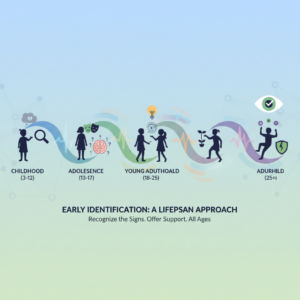
Half of all mental illnesses begin by age 14 and 75% by age 24 [1]. That means what begins in adolescence often evolves in adulthood. By the time you notice adult mental health warning signs, symptoms may have existed in milder form for years.
Recognizing these changes early matters because:
- Untreated symptoms often worsen over time and can be harder to treat later [2]
- Early intervention can reduce the severity of illness, lower the chance of hospitalization, and improve long term outcomes [1]
- Getting help sooner can protect your work, relationships, and physical health
If you are also trying to understand how symptoms looked earlier in life, our resources on early signs of mental illness in teenagers and how symptoms evolve from teen to adult can provide helpful context.
Normal stress vs mental health concerns
You will not feel great all the time. Sadness after a loss, irritability during a stressful month, or anxiety before a big exam are hard but normal human reactions. The challenge is knowing when those reactions cross into a possible disorder.
According to The Jed Foundation, the key difference is impact on daily life. Normal emotions tend to be:
- Tied clearly to a situation
- Short term and gradually improving
- Manageable without major lifestyle breakdowns
Mental health disorders, in contrast, involve thoughts, emotions, or behaviors that:
- Last for weeks or months
- Feel out of proportion to the situation
- Interfere with work, school, or relationships
- Are hard to manage even when you try to cope [2]
If you are unsure whether what you are seeing is age related or something more, it can help to compare teen and adult patterns using guides like mental health symptoms in adults vs adolescents and difference between teen and adult mental health symptoms.
Emotional warning signs in adults
Emotional changes are often the first adult mental health warning signs, although adults usually hide them better than teens.
Persistent mood changes
You might notice:
- Ongoing sadness, emptiness, or hopelessness
- Loss of interest in hobbies or relationships that used to matter
- Feeling numb or detached from life
For adults, these changes tend to show up as a quiet withdrawal or “going on autopilot,” rather than the dramatic mood swings you might see in adolescents. Depression in adulthood is more likely to look like exhaustion, irritability, and disconnection than obvious crying spells. Comparing depression symptoms in teens vs adults can clarify what is typical at different ages.
If low mood or emotional flatness persists for weeks and starts to affect work performance, family roles, or self care, it is time to consider professional evaluation [3].
Excessive anxiety or fear
Worry is part of life. The concern is when anxiety:
- Is constant or hard to shut off
- Leads to avoidance of important situations, like work meetings or exams
- Triggers physical symptoms such as racing heart, shortness of breath, dizziness, or panic attacks [2]
Adults often explain anxiety as “stress” and keep pushing through. Yet chronic, uncontrollable worry can signal generalized anxiety disorder or other conditions that benefit from treatment [4].
If you are thinking back to adolescence and how worry showed up then, you might find how anxiety shows up differently in teens helpful.
Irritability, anger, or aggression
In teens, emotional dysregulation is often expected. In adults, prolonged irritability or aggression is a stronger red flag.
Warning patterns include:
- Anger that lasts for months, not days
- Frequent outbursts over small frustrations
- Verbal or physical aggression toward others or oneself
Johns Hopkins Medicine lists frequent aggression and anger lasting more than six months as important signs that an adult should be evaluated for mental health issues [4].
Sometimes what looks like “bad temper” in adulthood is actually a symptom of depression, anxiety, bipolar disorder, or trauma. Guides on emotional dysregulation in teens vs adults and warning signs of mood disorders by age can shed light on how patterns shift over time.
Behavioral changes you should not dismiss
Behavior often changes before someone is willing or able to describe how they feel. Watching for shifts in daily actions can help you catch problems earlier.
Declining work or school performance
For adults, functioning at work or in higher education is a crucial marker. Significant changes include:
- Noticeable drop in performance or grades
- Poor attendance or frequent unexplained absences
- Struggling to complete basic tasks or meet deadlines
A big decline in productivity or attendance is a key adult mental health warning sign that something deeper may be happening [4].
In teens, similar drops tend to show up as school refusal, missing assignments, or conduct issues. You can compare these patterns in more depth in behavioral changes in teenage mental health.
Social withdrawal and isolation
Pulling back from others is common in many mental health conditions, including depression, anxiety, psychosis, and some dementias.
In adults, watch for:
- Losing interest in friends, family gatherings, or hobbies
- Spending most free time alone, even when support is available
- Refusing invitations or making excuses repeatedly
Johns Hopkins Medicine notes that social withdrawal from activities, friends, or family is a core warning sign that an emotional or behavioral problem may be present [4].
In teens and young adults, withdrawal can look different, with more time in their room or online. The resource on recognizing emotional distress in teens can help you spot early patterns that may carry into adulthood.
Changes in sleep and daily rhythms
Sleep is tightly linked to mental health. You should pay attention when you see:
- Insomnia, trouble falling or staying asleep
- Sleeping far more than usual
- Frequent nightmares or flashbacks that disturb rest
Persistent sleep problems such as nightmares, insomnia, or hypersomnia are important warning signs of potential mental health issues in adults [4].
In adolescence, irregular sleep is common but still matters if it is extreme or tied to other symptoms. You can learn more about those patterns in how age impacts mental health symptoms.
Risky, impulsive, or bizarre behavior
Not all mental health concerns look like sadness or worry. Some show up as actions that are very different from a person’s usual behavior.
Red flags include:
- Reckless spending, sexual behavior, or substance use that is out of character
- Severe restlessness or agitation
- Unusual, inappropriate, or bizarre actions
- Dramatic changes in energy or activity levels
A 2022 review in the Singapore Medical Journal notes that altered behavior in adults under 65, including psychomotor agitation, personality changes, or bizarre actions, should prompt urgent medical evaluation to distinguish psychiatric from medical causes [5].
In bipolar disorder, for instance, manic or hypomanic episodes can involve impulsive decisions, decreased need for sleep, and a surge in energy. These episodes are often misdiagnosed as simple depression if the elevated mood periods are not recognized [5].
Cognitive and perceptual warning signs
Changes in thinking and perception can feel frightening or confusing. They are also some of the clearest adult mental health warning signs that professional assessment is needed.
Problems with concentration, memory, or thinking
Everyone has off days, but lasting changes may signal depression, ADHD, anxiety, or early cognitive disorders.
Watch for:
- Difficulty focusing on tasks you used to handle easily
- Trouble following conversations, instructions, or plans
- Frequent forgetfulness that disrupts daily life
When these issues interfere seriously with your ability to work, study, or relate to others, evaluation by a mental health professional is recommended [1].
Hallucinations, delusions, or disorganized thinking
Some symptoms clearly point to serious mental illness and should never be ignored:
- Seeing, hearing, or sensing things that others do not
- Strong fixed beliefs that are clearly false or not shared by your culture
- Disorganized speech or behavior that does not make sense
Merck Manuals lists delusions, hallucinations, and disorganized speech or behavior as core warning signs that require immediate evaluation by a healthcare provider [6].
In late onset schizophrenia, which appears after age 40, early signs can include complex hallucinations and delusions, as well as social withdrawal and impaired grooming [5]. These symptoms are often underdiagnosed in primary care, which is why noticing and reporting them clearly is so important.
Confusion or sudden personality change
Some mental health like symptoms can actually indicate serious medical issues.
Seek urgent medical help if you notice:
- Sudden confusion, clouded thinking, or inability to focus
- Slurred speech or trouble finding words
- Not knowing where you are or what day it is
- Large, abrupt changes in personality or behavior without an obvious trigger
Confusion and delirium in adults often suggest serious medical problems and need urgent attention [6]. Adults showing personality or behavior changes along with fever, neurological symptoms, or recent head injury should be evaluated immediately to rule out medical causes [6].
Frontotemporal dementia, for example, can present in adults under 65 with progressive behavioral changes like apathy, poor impulse control, disinhibition, and decline in social conduct. It is often mistaken for a purely psychiatric condition, so cognitive assessment and possible specialist referral are critical [5].
Physical symptoms that may signal mental health issues
Mental health lives in the body as well as the mind. Many adults first notice physical changes long before they think of mental health.
Unexplained aches, tension, or pain
Chronic stress, anxiety, and depression can all show up physically. Important patterns include:
- Constant muscle tension or tightness
- Frequent headaches, neck pain, or back pain
- Body aches without a clear medical cause
Mental Health America notes that chronic stress can cause muscle tightness that leads to frequent headaches, neck pain, and unexplained body aches. Research also shows that depression can increase pain sensitivity and often appears with tension headaches and migraines [7].
Healthline reports that mental illnesses like anxiety and depression can lower pain tolerance, in part because the neurotransmitters serotonin and norepinephrine influence both pain and mood [8].
Digestive issues and stomach problems
The gut and brain are closely connected. You may notice:
- Stomach pain, cramps, or nausea
- Diarrhea or constipation that worsens with stress
- Bloating or irritable bowel syndrome symptoms
Mental Health America explains that stress, anxiety, and depression can cause digestive problems, including irritable bowel syndrome with pain, bloating, diarrhea, and constipation, because of how the gut’s nervous system communicates with the brain [7].
Healthline notes that anxiety can manifest as stomach pain or digestive issues, particularly when stress increases [8].
Heart related sensations and breathing
Anxiety and panic can strongly affect how your heart and chest feel. Warning signs include:
- Fast heartbeat, pounding heart, or heart flutters
- Chest tightness, pressure, or discomfort
- Dizziness, lightheadedness, or shortness of breath during intense worry or stress
Panic symptoms from intense stress can mimic heart problems even when the heart is medically healthy. Over time, however, chronic anxiety can negatively affect the heart and blood vessels [7].
Before assuming symptoms are “just anxiety,” you should always seek medical evaluation to rule out physical causes. Healthline emphasizes that recognizing pain as potentially psychosomatic is important, but that adults should first have thorough medical assessments before turning solely to mental health explanations [8].
When physical and mental health overlap
Adults who have many physical complaints without a clear medical cause, such as constant tension, frequent aches and pains, sudden panic, dizziness, increased heartbeat, or persistent feelings of guilt, helplessness, or hopelessness, should be evaluated for possible mental health conditions [4].
People in rural or stigmatizing environments may be more likely to express emotional distress through physical symptoms first because of fear of judgment or mistrust of mental healthcare [7].
If you are trying to understand how these patterns begin earlier in life, you might explore mental health development stages explained or identifying mental illness across age groups.
Teen vs adult mental health symptoms
Because so many conditions begin in adolescence and continue into adulthood, it helps to compare patterns at different ages.
In general:
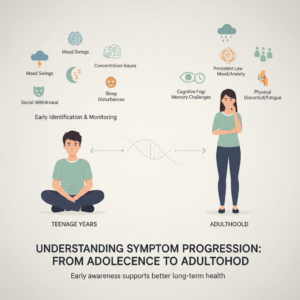
- Teens often show faster, more dramatic shifts in mood and behavior, partly because their brains and environments are changing rapidly.
- Adults tend to show more subtle, chronic changes that interfere with responsibilities, such as work, parenting, and long term relationships.
- Teens may express distress behaviorally, through acting out, school problems, or conflict. Adults are more likely to internalize distress and keep functioning outwardly until things become severe.
For example:
- Anxiety in teens might look like school refusal, perfectionism around grades, or friendship drama. In adults, it may appear as chronic overwork, burnout, or avoidance of certain responsibilities.
- Depression in teens can show up as irritability, sensitivity to rejection, or social withdrawal. In adults, it more often appears as exhaustion, guilt, and loss of motivation. You can see more differences in depression symptoms in teens vs adults.
- Mood disorders in adolescents may cycle quickly or be mistaken for “normal teenage moodiness.” In adults, repeated episodes that disrupt work or relationships are clearer red flags.
Resources like teen mental health vs adult mental health differences, mental health red flags in young adults, and early mental health symptoms in young adults can help you see how problems shift as a person moves from high school into college and beyond.
If you are unsure whether teen behavior is “just a phase,” guides such as when teen behavior is more than normal and how to recognize mental health issues in teens are useful complements to this article.
If you notice several emotional, behavioral, cognitive, or physical changes at the same time, and they are lasting, that pattern is much more significant than any single symptom by itself.
When adult warning signs indicate serious risk
Some adult mental health warning signs require immediate action, not watchful waiting.
You should seek urgent or emergency help if:
- There are thoughts, plans, or talk of suicide, self harm, or harming others
- There is a suicide attempt or self injurious behavior
- Symptoms begin suddenly and severely
- There is confusion, delirium, or sudden disorientation
- Symptoms occur with fever, severe headache, difficulty walking, speaking, or using the arms or legs
- There was a head injury in the previous days or weeks
Merck Manuals highlights these scenarios as reasons to seek immediate evaluation to determine if the cause is psychiatric, medical, or both [6].
The Jed Foundation and NAMI both recommend immediate help for suicidal thoughts or behaviors. Adults in crisis can:
- Call or text 988 for the Suicide & Crisis Lifeline
- Text HOME to 741-741 to reach Crisis Text Line
- Contact the NAMI HelpLine at 800-950-6264 or text “NAMI” to 62640 for support and resources [9]
If you are supporting someone else, you do not need their permission to call a crisis line for guidance on what to do next.
Getting help and what to expect
There is no single lab test for mental illness. Instead, professionals use your personal history, current symptoms, medical exams, and diagnostic criteria from the DSM to determine what is happening [3].
First steps you can take
If you recognize warning signs in yourself or another adult, you can:
- Talk with a primary care doctor about symptoms, both mental and physical
- Reach out to a therapist, psychologist, or psychiatrist
- Share concerns with a trusted person, such as a partner, friend, or family member
The Jed Foundation emphasizes the importance of starting by talking with a trusted adult or health professional, because untreated symptoms often worsen over time and early support can prevent more serious problems [2].
Support from family, teachers, coaches, spiritual leaders, and other community members also matters for recognition and treatment engagement, especially when symptoms first appear in adolescence or young adulthood [1].
Treatment options for adults
Treatment varies depending on your diagnosis and needs, and usually includes one or more of the following:
- Medication, such as antidepressants, mood stabilizers, or antipsychotics
- Individual, group, or family therapy
- Skills based programs, for example cognitive behavioral therapy, to change unhelpful thoughts and behaviors
- Social support, such as peer groups or community resources
- Education about your condition and relapse prevention strategies
NAMI notes that effective treatment is tailored to the individual, including personal preferences and goals. Early intervention, even before a full syndrome develops, can minimize or delay symptoms, reduce severity, and sometimes help prevent a major mental illness from fully developing as part of a comprehensive addiction treatment approach.
If you are navigating this across ages, resources like identifying mental illness across age groups and mental health development stages explained can deepen your understanding of how treatment needs evolve.
Putting it all together
Adult mental health warning signs are rarely just one symptom. They are usually a pattern of changes in how you feel, think, behave, and function in everyday life. You should pay close attention when you notice:
- Persistent mood changes that affect work, relationships, or self care
- Ongoing anxiety, panic, or irritability that you cannot manage alone
- Social withdrawal, major drops in performance, or risky behavior
- New problems with thinking, memory, or perception
- Physical symptoms like chronic pain, stomach trouble, or chest tightness without a clear medical cause, especially if they worsen with stress
If the same person had early challenges in adolescence, resources like how age impacts mental health symptoms and teen mental health vs adult mental health differences can help you trace the full picture.
You do not need to wait until things are “bad enough” to deserve support. If you notice several warning signs that are lasting and disruptive, that is reason enough to reach out. Early recognition and action are not overreactions. They are how you protect long term mental health for yourself and the people you care about.