Why recognizing serious mental illness in adults matters
When you are worried about an adult in your life, it can be hard to know where everyday stress ends and where serious mental illness begins. Mental illness is common, affecting about 1 in 5 adults in any given year, and it can appear at any age, although most conditions begin earlier in life [1].
Understanding the key signs of serious mental illness in adults helps you respond quickly, support the person you care about, and seek professional help before the situation worsens. Early recognition and treatment can reduce the long‑term impact on work, relationships, and health [2].
If you are also caring for teens or young adults, it is important to understand how the same condition can look different at different ages. Resources like teen mental health vs adult mental health differences and identifying mental illness across age groups can help you connect the dots across your family.
What counts as “serious” mental illness in adults
Mental illness covers a wide range of conditions that affect mood, thinking, and behavior. This includes depression, anxiety disorders, bipolar disorder, schizophrenia, eating disorders, trauma‑related conditions, and addictive behaviors [1].
You are usually looking at a serious mental illness in an adult when:
- Symptoms are intense, persistent, or worsening over weeks or months
- Daily life is clearly disrupted, for example work, parenting, basic self‑care
- Thoughts or behaviors become unsafe to the person or to others
Mental health professionals rely on criteria in the Diagnostic and Statistical Manual of Mental Disorders (DSM). These criteria focus on what the person feels, how they behave, how long symptoms last, and how much their life is disrupted [3]. There is no single blood test or brain scan that can “prove” a mental illness, which is why careful evaluation is so important.
If you suspect a problem in yourself or someone close to you, reviewing adult mental health warning signs alongside this guide can clarify what you are seeing.
Emotional signs you should not ignore
Serious mental illness often shows up first as emotional changes. While everyone has hard days, pay attention when emotions are intense, long‑lasting, or clearly out of character.
Mood extremes and instability
Adults with serious mood disorders may experience:
- Persistent sadness, emptiness, or hopelessness that lasts most of the day, nearly every day
- Loss of interest in activities that used to matter, such as hobbies, social time, or work
- Strong changes in appetite or sleep that track with mood shifts
On the other end, bipolar disorder and related conditions can involve episodes of mania, with:
- Elevated or unusually irritable mood
- Inflated self‑confidence or grand ideas
- Decreased need for sleep without feeling tired
- Risky spending, sexual behavior, or decision‑making
These patterns matter when they are not just a reaction to a specific stressor and when they start to affect functioning. Untreated, they can worsen over time and lead to serious complications, including suicidal thoughts [1].
Anxiety, fear, and agitation
Anxiety can be a normal response to stress, but in serious mental illness it becomes:
- Excessive worry that is difficult to control and is present most days
- Physical tension, restlessness, or feeling “on edge” much of the time
- Panic attacks with racing heart, shortness of breath, or fear of dying
Persistent sleep problems, including nightmares and insomnia, can also signal underlying anxiety or trauma‑related conditions in adults [4].
Emotional pain in the body
Many adults describe mental health problems as physical discomfort rather than “feeling sad” or “feeling anxious.” Unexplained stomach pain, back pain, or headaches can be part of depression or anxiety, especially when medical tests do not show another cause [1].
If you are seeing these emotional changes in a younger person, it may look different. You can compare patterns using resources like depression symptoms in teens vs adults and how anxiety shows up differently in teens.
Behavioral signs of serious mental illness in adults
Serious mental illness rarely stays “inside.” It usually shows up in visible behavior, routines, and responsibilities. These changes are often what family members notice first.
Work, home, and social functioning
Adult responsibilities make behavioral shifts easier to spot. Concerning signs include:
- Significant drop in work performance, chronic lateness, or frequent absences [4]
- Neglecting bills, childcare, or household tasks that were previously handled reliably
- Withdrawing from friends, family, or activities for weeks or months [4]
Social withdrawal can look different in adults than in teens. An adult might cancel plans because of “burnout” or “being too busy,” while a teen might retreat to their room or discontinue extracurriculars. The article on behavioral changes in teenage mental health explains these differences in younger people.
Aggression, irritability, and risky behavior
Constant or frequent anger and aggression that continue longer than six months, especially when out of proportion to the situation, can signal serious emotional problems in adults [4]. You might notice:
- Regular shouting, verbal outbursts, or intimidation
- Physical fights or property destruction
- Road rage, reckless driving, or confrontations
Destructive behaviors, such as stealing, criminal activity, or substance misuse, can also be part of an underlying mental health condition, including mood disorders, personality disorders, or trauma‑related conditions [5].
Sleep and daily rhythm changes
Sleep is closely tied to mental health. Watch for:
- Insomnia, difficulty falling or staying asleep, or waking too early
- Sleeping much more than usual or struggling to get out of bed
- Nightmares or flashbacks that disrupt sleep, especially after trauma [4]
In adults, changes in sleep often show up as being late to work, calling in sick frequently, or needing daytime naps. In teens the same issues may appear as late school arrivals, falling grades, or irritability, which you can explore further in early signs of mental illness in teenagers.
Cognitive and perception changes
Mental illness does not only affect mood. Serious conditions can alter how a person thinks, processes information, and interprets reality.
Confusion and disorganized thinking
Key cognitive warning signs in adults include:
- Trouble focusing, following a conversation, or completing tasks
- Disorganized speech, jumping between unrelated topics, or responding in ways that do not fit the conversation
- Difficulty making decisions that used to be straightforward
Sudden confusion or delirium can indicate a serious underlying problem, including medical conditions like infections or neurological issues, and requires urgent evaluation [5].
Delusions and hallucinations
Psychotic symptoms are strong indicators of serious mental illness. They can occur in schizophrenia, bipolar disorder, severe depression, and some medical conditions. Watch for:
- Delusions, which are firmly held false beliefs, such as thinking someone is following you, believing you have special powers, or insisting you are being poisoned without evidence
- Hallucinations, such as hearing voices when no one is there, seeing things others do not see, or feeling sensations that have no physical cause [5]
These experiences usually cause distress or lead to behaviors that do not make sense to others. If you notice them, encourage urgent professional assessment.
When sudden personality changes are a red flag
Some mental health conditions develop gradually and are preceded by small shifts in thinking, feelings, or behavior. Major illnesses like schizophrenia or bipolar disorder rarely appear overnight, which is why early recognition is so important [2].
However, sudden and major behavior or personality changes in an adult, especially when not clearly linked to a life event or medication change, are concerning. Examples include:
- A typically calm person becoming suspicious, aggressive, or impulsive
- A responsible adult suddenly abandoning work, family, or financial responsibilities
- Rapid onset of confusion, strange beliefs, or disorganized actions
These shifts can point to serious mental illness or to physical conditions that affect the brain. Adults with sudden or worsening symptoms need a thorough evaluation that usually includes medical history, physical and neurological exams, and often blood tests or brain imaging to rule out other causes [5].
To understand how gradual changes may appear earlier in life, you can review mental health development stages explained and how symptoms evolve from teen to adult.
Physical and medical red flags
Mental illness can cause or worsen physical symptoms, and physical conditions can mimic or trigger mental health problems. You should seek urgent medical evaluation if you notice:
- Sudden onset of severe confusion, delirium, or disorientation
- Fever, severe headache, or recent head injury along with behavior changes
- Difficulty walking, balancing, speaking, or problems with vision [5]
Persistent physical complaints such as chronic tension, unexplained aches and pains, or constant fatigue can also point to underlying mental health conditions, especially when standard medical tests are normal [4].
Suicidal thoughts and danger to self or others
Thoughts or talk of suicide are always serious. This includes:
- Expressing a desire to die or not wanting to exist
- Talking about feeling trapped, hopeless, or being a burden
- Looking for ways to hurt oneself, such as searching for methods or acquiring weapons
Suicidal thoughts and behaviors are common in some mental illnesses, especially severe depression and mood disorders. Immediate help is needed if you think an adult might hurt themselves or someone else [1].
If you or someone you know is in crisis:
Call or text 988 in the United States to reach the 988 Suicide & Crisis Lifeline, available 24/7 for immediate support [3].
NAMI also offers a HelpLine at 800‑950‑6264, Monday through Friday from 10 a.m. to 10 p.m. ET, and you can text “NAMI” to 62640 for information and support [3].
Threats to harm others, escalating aggression, or destructive behaviors like arson or serious criminal activity also require urgent intervention [4].
How adult symptoms differ from teen mental health signs
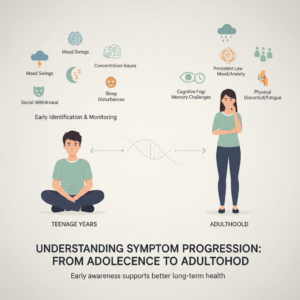
The same diagnosis can look very different in a 16‑year‑old and a 36‑year‑old. Age, life stage, and responsibilities shape how symptoms show up. Understanding these differences can help you tell whether you are seeing normal developmental changes or red flags that need attention.
Here is a simplified comparison of how some key symptoms tend to appear across ages:
| Symptom area | Typical teen presentation | Typical adult presentation |
|---|---|---|
| Mood changes | Irritability, school refusal, conflict with parents, social media changes | Work problems, relationship breakdowns, withdrawal from friends and family |
| Anxiety | Avoiding school, clubs, or sports, somatic complaints before class | Avoiding work or public places, frequent sick days, chronic worry about finances or caregiving |
| Sleep | Late‑night screen use, difficulty waking for school | Insomnia tied to work stress, oversleeping on days off, fatigue at work |
| Behavior | Sudden drop in grades, risky peer groups | Decline in job performance, substance misuse, financial or legal problems |
To explore these patterns more deeply, you can read mental health symptoms in adults vs adolescents, difference between teen and adult mental health symptoms, and warning signs of mood disorders by age.
If you are wondering whether a teen’s behavior is still within the range of normal development, when teen behavior is more than normal and how to recognize mental health issues in teens can help you decide when to seek help.
When to seek professional help
You should consider a professional evaluation when:
- Symptoms persist for several weeks or longer
- There is clear distress or disruption in daily activities, relationships, or work [6]
- Multiple signs appear together, for example mood changes plus sleep problems plus withdrawal [2]
Mental health diagnoses in adults can be made by psychiatrists, psychologists, clinical social workers, and other mental health professionals. In some cases, a primary care provider can start the evaluation and refer you for specialized care [6].
Many adults delay or avoid treatment because of shame, fear, or the belief that their symptoms are “just part of life.” Yet with the right support, most mental health conditions can be identified and treated successfully [6].
If you are noticing early warning signs in a younger adult, early mental health symptoms in young adults and mental health red flags in young adults can guide next steps.
Why early identification makes a difference
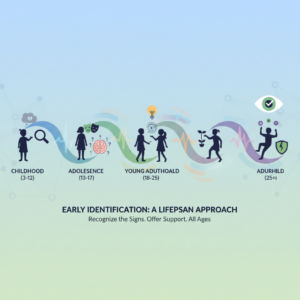
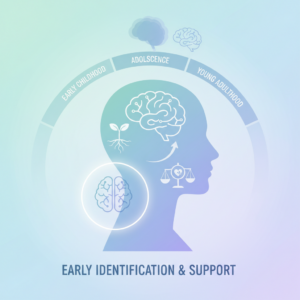
Half of all mental illnesses begin by age 14, and three‑quarters by age 24 [2]. That means that by the time you notice serious signs in an adult, the condition may have been developing quietly for years.
Early intervention can:
- Lessen the severity of the illness
- Delay onset of more serious symptoms
- Sometimes prevent the full development of a major mental illness [2]
Comprehensive treatment often includes counseling, family support, education or work assistance, group problem‑solving, and medication when appropriate, with family and community members as key partners [2].
If you are tracking changes across your family, resources such as how age impacts mental health symptoms, emotional dysregulation in teens vs adults, and recognizing emotional distress in teens can help you see the whole picture across generations.
Taking your next step
If you recognize several of these signs of serious mental illness in adults in yourself or someone close to you, you do not need to figure it out alone. Start by:
- Scheduling an appointment with a primary care provider or mental health professional
- Writing down the symptoms you have noticed, when they started, and how they affect daily life
- Bringing a trusted friend or family member to the appointment to share observations
For families navigating both teen and adult mental health concerns, reviewing identifying mental illness across age groups can help you organize what you are seeing and plan how to get everyone the help they need.
If at any point you are worried about immediate safety, call 988 in the United States or your local emergency number. Swift action, even when you are unsure, is always better than waiting and hoping symptoms will resolve on their own. Untreated mental illness can worsen over time, but with timely care, many adults regain stability, reconnect with what matters to them, and build a path forward that feels possible again [1].