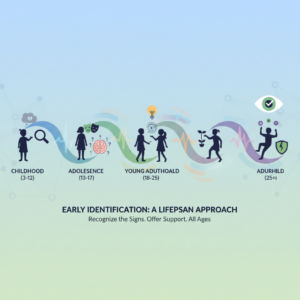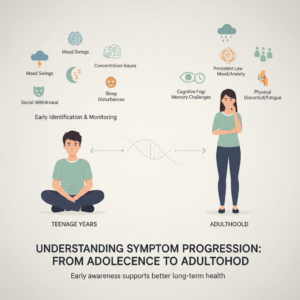
Identifying mental illness across age groups can feel confusing. Behaviors that are normal at one age can be warning signs at another. When you understand how symptoms shift from childhood to older adulthood, you are better prepared to notice problems early and seek the right kind of help.
This guide walks you through how mental health concerns can look different at each life stage, from children and teens through midlife and older adulthood. You will learn what is developmentally typical, what may signal deeper issues, and when it is time to reach out for professional support.
Why age matters in mental health
Mental health symptoms do not exist in a vacuum. They are shaped by:
- Brain development
- Hormones and physical maturation
- Life roles and responsibilities
- Social expectations and stressors
Many common mental health disorders actually begin early in life. Large population studies show that anxiety disorders often start in childhood, with a median onset around age 11, while mood disorders like depression more commonly emerge in early adulthood, with a median onset around age 30 [1]. This means that what you notice in adolescence or young adulthood can be the early form of conditions that persist later if they are not treated.
At the same time, symptoms do not look identical across ages. A depressed 12‑year‑old, a burned‑out 35‑year‑old, and a lonely 80‑year‑old can each meet criteria for depression, yet show it in very different ways.
Understanding these differences is central to identifying mental illness across age groups and getting support before crises develop.
Understanding development and “what is normal”
To sort out normal behavior from warning signs, you first need a realistic sense of typical development. Rapid change is built into childhood and adolescence, while adulthood and older age bring different types of transitions.
Children: Big feelings and skill building
In childhood, brains and emotional skills are still under construction. It is normal for younger children to:
- Have big emotions that come and go quickly
- Struggle to put feelings into words
- Test limits and copy others’ behavior
It becomes more concerning when you see ongoing, severe changes in thinking, behavior, social skills, or emotional control that cause distress or interfere with school, home, or friendships. That kind of persistent disruption is one of the key ways professionals distinguish normal development from mental health disorders in children [2].
Teens: Identity, independence, and risk taking
Teen years involve intense brain remodeling, hormonal shifts, and major social pressures. You can expect:
- Bigger mood swings
- Arguments about independence
- Changing friend groups and interests
The challenge is recognizing when typical teenage turbulence has crossed a line into a mental health condition. If you are trying to better understand that line, resources like early signs of mental illness in teenagers, behavioral changes in teenage mental health, and when teen behavior is more than normal can help you look more closely at what you are seeing.
Adults: Role strain and chronic stress
In adulthood, you typically see:
- More stable personality and routines
- Increased responsibilities at work and home
- Ongoing exposure to financial, relational, and health stress
Mental illness often shows up here as chronic anxiety, low mood, burnout, or difficulty coping with the cumulative stress of these roles. If you are comparing patterns, mental health symptoms in adults vs adolescents and teen mental health vs adult mental health differences are useful places to start.
Older adults: Loss, health changes, and independence
Later life often involves:
- Retirement or loss of structured work
- Medical illnesses and physical limitations
- Bereavement, social isolation, or moves
Contrary to popular belief, emotional suffering is not an inevitable part of aging. Depression and severe anxiety are not “just getting old.” They are treatable medical conditions that should be taken seriously at any age [3].
How common mental health disorders begin
When you are identifying mental illness across age groups, it helps to know which conditions typically emerge when.
Research shows:
- Many anxiety disorders begin in childhood and adolescence, and in 2021 about 72 million children and adolescents worldwide were living with anxiety disorders [4].
- Depressive disorders often appear later, but depression can affect children and teens too; in 2019, an estimated 23 million children and adolescents were living with depression worldwide [4].
- Bipolar disorder can emerge in adolescence, with about 3.8 million adolescents aged 10 to 19 affected in 2021 [4].
- Eating disorders often start in adolescence or early adulthood, with almost 3.4 million children and adolescents affected in 2021 [4].
- Disruptive and dissocial disorders, such as conduct disorder, typically onset in childhood and can persist if untreated, impacting about 41 million people including children and adolescents in 2021 [4].
These patterns highlight why early identification matters. Many adult mental health conditions began years earlier in subtler forms. To understand how problems can evolve, you can explore mental health development stages explained, how age impacts mental health symptoms, and how symptoms evolve from teen to adult.
Children: What to watch for
Recognizing mental illness in children is uniquely challenging. Normal development involves constant change, and younger children may not be able to explain what they feel. You usually have to rely on behavior, play, and school performance.
Mental health professionals look for delays or changes in:
- Thinking and learning
- Emotional control
- Social skills and relationships
- Behavior patterns
These changes must cause distress and interfere with life at home, school, or in social situations before they are considered a mental health disorder [2].
Some concerning signs can include:
- Loss of interest in play or activities they used to enjoy
- Persistent sadness, tearfulness, or irritability for weeks
- Aggression, frequent intense tantrums, or extreme defiance
- Sudden drop in school performance or refusal to attend
- Repeated complaints of headaches or stomachaches with no clear medical cause
- Nightmares, sleep problems, or new bedwetting after being dry
- Social withdrawal or seeming unable to make or keep friends
The key is persistence, severity, and impact. Almost every child will have outbursts or fears. You are looking for patterns that last for weeks, steadily worsen, or clearly interfere with daily functioning.
If you are concerned, professionals typically use tools like the DSM (Diagnostic and Statistical Manual of Mental Disorders) or ICD (International Classification of Diseases) to guide diagnosis, along with interviews and behavioral observations [2].
Teens and young adults: Emotional and behavioral red flags
Adolescence and early adulthood are high‑risk times for the onset of many mental health conditions. Symptoms often show up differently than they do in older adults, which is why how to recognize mental health issues in teens and recognizing emotional distress in teens focus heavily on patterns rather than single incidents.
Emotional signs
In teens, emotional symptoms can include:
- Irritability or anger that seems out of proportion to the situation
- Dramatic mood swings that persist, not just occasional bad days
- Intense self‑criticism, shame, or hopelessness about the future
- Strong anxiety about school, social situations, or performance
Unlike adults, who may describe feeling “depressed” or “anxious,” teens often show their distress through irritability or acting out rather than direct expressions of sadness. This is one reason emotional dysregulation in teens vs adults can look so different.
Behavioral signs
Behavior and choices are often your clearest window into teen and young adult mental health. Warning signs can include:
- Sudden changes in peer groups or secretive relationships
- Withdrawing from family and long‑time friends
- Skipping school, failing classes, or quitting activities abruptly
- Substance use, self‑harm, or other risky behaviors
- Drastic changes in sleep or appetite
If you want a deeper dive into these patterns, behavioral changes in teenage mental health and mental health red flags in young adults offer more detailed examples.
Anxiety and depression in teens vs adults
Anxiety and depression are among the most common issues in adolescence. They also remain highly prevalent in adulthood, but symptoms can appear differently by age.
You can learn more through:
- How anxiety shows up differently in teens
- Depression symptoms in teens vs adults
- Difference between teen and adult mental health symptoms
As a general guide:
- An anxious teen may become more clingy, avoid school, or complain of physical symptoms like headaches, while an anxious adult may report constant worrying about work, finances, or caregiving responsibilities.
- A depressed teen might show more irritability, school refusal, or risky behavior, while a depressed adult may show slowed thinking, loss of productivity, or social withdrawal from established relationships.
Adults: When stress becomes something more
In adulthood, it can be easy to normalize distress. You might attribute everything to work, finances, parenting, or relationship pressures and overlook emerging mental illness.
However, population data suggest that common mental health disorders are widespread. One large survey in England found that 16.2% of adults aged 16 to 64 met criteria for at least one common mental health disorder in any given week, with higher rates in women and in people facing social disadvantage [1].
Some adult warning signs include:
- Ongoing sadness, emptiness, or tearfulness lasting weeks
- Loss of interest in hobbies, sex, or relationships
- Feeling constantly on edge, keyed up, or unable to relax
- Difficulty concentrating, making decisions, or remembering details
- Increased use of alcohol, drugs, or other substances to cope
- Explosive anger, irritability, or frequent conflicts at work or home
- Changes in sleep patterns or appetite that persist
If you are unsure how your experience compares to typical adult patterns, adult mental health warning signs, early mental health symptoms in young adults, and warning signs of mood disorders by age can provide additional context.
It is also important to remember that some adults live with learning disabilities or neurodevelopmental conditions. Studies suggest they may experience common mental health disorders at higher rates, including up to a four‑fold increase in affective disorders and elevated rates of obsessive‑compulsive disorder [1]. This can make identification more complex, and specialized assessment is often helpful.
Older adults: Overlooked and misunderstood symptoms
Mental illness in older adults is both common and frequently missed. Nearly 15% of adults aged 50 and older in the United States have some type of mental health disorder, and with population aging, this number is expected to double by 2030 [3].
Despite this, about two‑thirds of older adults with mental illness do not receive the treatment they need, which reflects major gaps in diagnosis and care [3].
How symptoms often appear
According to the CDC, roughly 20% of adults over 50 experience mental health issues such as anxiety, depression, mood disorders, or severe cognitive impairment, which can complicate management of physical health conditions [5]. Older adults are also over‑represented in suicide statistics. Although they make up about 12% of the population, they account for 18% of suicides [5].
Key warning signs in older adults can include:
- Social isolation or withdrawing from usual activities
- Appetite changes and weight loss or gain
- New confusion, disorientation, or memory problems
- Unexplained physical symptoms like pain, fatigue, or digestive issues
- Persistent sadness, anxiety, or irritability
- Declining personal hygiene or self‑care
- Misuse of alcohol, medications, or other substances
- Sleep difficulties or sleeping far more than usual
- Expressing feelings of worthlessness, hopelessness, or wanting to die
Importantly, confusion or disorientation is not always dementia. It can also signal major depression or psychosis, so a careful evaluation is critical [5].
Barriers to getting help
Older adults face specific obstacles that make identification and treatment harder, including:
- Negative stereotypes about aging
- Stigma around mental health
- Lack of awareness that symptoms are treatable
- Practical barriers like transportation or rural living
These factors combine to keep many older adults from receiving timely care [3].
A multicountry study of people accessing mental health services in humanitarian settings found that older adults were more likely to present with age‑related symptoms, physical complaints, social functioning problems, and neuro‑psychiatric symptoms, and less likely to have typical anxiety or mood symptoms compared with younger adults [6]. This suggests that in older individuals, mental illness often hides behind physical or social problems rather than clear emotional complaints.
Emotional, behavioral, and cognitive differences by age
When you are identifying mental illness across age groups, it helps to look at three broad domains: emotions, behavior, and thinking. Each shifts with age.
In any age group, worrying signs are those that persist for weeks, steadily worsen, and interfere with daily functioning at home, school, work, or in relationships.
Emotional patterns
- Children may show distress through fearfulness, clinginess, or frequent crying.
- Teens often express emotional pain as irritability, anger, or intense mood swings rather than quiet sadness.
- Adults tend to report persistent low mood, anxiety, guilt, or loss of pleasure.
- Older adults might downplay emotions and focus on physical complaints, or describe feeling “tired of life” more than “depressed.”
Behavioral patterns
- Children may regress, for example, bedwetting or losing previously gained skills, or become highly oppositional.
- Teens may engage in risk taking, self‑harm, school refusal, or sudden changes in social circles.
- Adults might withdraw from family, miss work, use substances more heavily, or let responsibilities slide.
- Older adults may stop engaging in hobbies, neglect self‑care, or become unusually dependent or irritable.
Cognitive patterns
- Children can have trouble focusing, learning, or keeping up academically.
- Teens may show black‑and‑white thinking, catastrophizing, or an intense fear of judgment.
- Adults may experience difficulty concentrating, indecisiveness, or racing thoughts.
- Older adults can show slowed thinking, memory problems, or confusion, which may be linked to depression, anxiety, or neurocognitive disorders.
Resources like mental health development stages explained and how age impacts mental health symptoms can help you map these patterns in more detail.
When to seek professional help
Regardless of age, you should consider a professional evaluation when:
- Symptoms last for several weeks or more.
- There is clear distress or suffering.
- Functioning at school, work, or home is impaired.
- Relationships are significantly strained or disrupted.
- There is any mention of self‑harm, suicide, or harm to others.
For children, this usually means starting with your pediatrician or family doctor and asking for a referral to a child and adolescent mental health specialist. Professionals will typically conduct a comprehensive assessment that includes talking with you and your child, and often gathering input from teachers or caregivers. This process can take time and sometimes needs to be revisited as your child grows, since young children may struggle to fully explain their inner experience [2].
For teens, young adults, and older adults, you may start with a primary care provider, a therapist, or a psychiatrist. Resources such as signs of serious mental illness in adults can guide you on when symptoms may require urgent or specialized attention.
The National Institute of Mental Health notes that treatment plans can include behavioral and psychotherapeutic approaches, medication, or a combination, depending on the diagnosis and severity [7]. Research also focuses on tailoring treatments to age and developmental stage, and on understanding which early interventions have lasting benefits into adolescence and adulthood [7].
Putting it together for your family
Identifying mental illness across age groups is not about memorizing lists of symptoms. It is about noticing patterns, changes, and impact over time.
You can use these guiding questions:
- How different is this behavior or mood from this person’s usual self?
- How long has it been going on?
- Is it getting better, staying the same, or worsening?
- Is it interfering with school, work, relationships, or daily functioning?
- Have there been recent stressors or losses that might be contributing?
If you are asking yourself whether something is “just a phase” or a sign of a deeper issue, you are already paying attention in a helpful way. Additional resources like how age impacts mental health symptoms and difference between teen and adult mental health symptoms can deepen that understanding.
Most importantly, you do not need to be certain before reaching out. A consultation is not a commitment to long‑term treatment. It is a way to get clarity and support. Mental health conditions are common, they are not character flaws, and across all ages, early recognition gives you more options and a better chance at lasting recovery.
References
- (NCBI Bookshelf)
- (Mayo Clinic)
- (NCOA)
- (WHO)
- (Bella Vista Health Center)
- (BMJ Global Health)
- (NIMH)