
Why recognizing emotional distress in teens is so challenging
Recognizing emotional distress in teens is not always straightforward. Normal adolescent development includes mood swings, stronger emotions, and a push for independence. At the same time, global data shows that about 1 in 7 adolescents aged 10 to 19 live with a mental health condition, and many remain undiagnosed and untreated [1].
When you look at your teen, you are often trying to answer a hard question: “Is this typical teenage behavior or a sign of something more serious?” This article focuses on recognizing emotional distress in teens, with a particular emphasis on how symptoms can differ from what you might expect in adults. Understanding these age-based differences can help you respond early and appropriately, and it can guide you toward resources like how to recognize mental health issues in teens when you need more support.
How teen mental health differs from adults
Adolescence is a time of rapid brain development. Areas involved in emotion and reward mature earlier than regions responsible for planning, judgment, and impulse control. This imbalance means that your teen can feel emotions more intensely while still learning how to regulate them.
Compared to adults, teens often show mental health symptoms through behavior and irritability rather than clearly stated sadness or anxiety. You might notice changes in school performance, sleep, or social life before your teen can explain what they are feeling inside. Understanding the difference between teen and adult mental health symptoms can help you make sense of what you are seeing.
In adults, depression may look like sustained low mood, hopelessness, and withdrawal. In teens, it can show up as anger, acting out, or refusing to participate in everyday responsibilities. Adult anxiety is often expressed as verbal worries or tension, while teen anxiety may look like avoidance of school, sudden health complaints, or spending excessive time online. If you want a broader comparison, resources on mental health symptoms in adults vs adolescents can provide additional context.
Common emotional signs of distress in teens
Emotional changes are often the first sign that something is not right. While occasional moodiness is part of being a teenager, certain patterns deserve more attention.
Teens experiencing distress may show:
- Persistent sadness, emptiness, or tearfulness
- Strong irritability and frequent anger
- Sudden mood swings that feel more intense or long lasting than usual
- Feeling “numb” or disconnected from their own emotions
Research highlights that irritability and anger in teens, which are often dismissed as “typical teenage behavior,” can actually be manifestations of depression and should be monitored as potential distress signs [2]. If your teen seems angry most of the time, snaps over small issues, or expresses constant frustration, it is important not to overlook this as only a phase.
You might also hear your teen talk negatively about themselves, describe feeling like a burden, or express hopelessness about the future. These statements can be subtle, such as joking about “not being around” or saying that nothing will ever improve. When you hear this type of language repeatedly, it may reflect deeper emotional distress.
Behavioral signs: When actions speak louder than words
For many teens, behavior is the clearest signal that they are struggling. According to UVA Health, one of the key signs of emotional distress is a drastic change in behavior, such as losing interest in activities to the point that academics or daily life are affected [2].
You might notice:
- Pulling away from friends or family
- Abrupt decline in school performance or skipping school
- Loss of interest in hobbies, sports, or activities they once enjoyed
- Changes in sleep patterns, either sleeping far more or far less
- Noticeable changes in appetite or weight
- Increased conflict at home, defiance, or breaking rules
Many of these shifts are covered more fully in discussions of behavioral changes in teenage mental health. What matters most is the pattern and impact. A teen who occasionally withdraws after a hard week is different from a teen who isolates for several weeks and stops participating in usual routines.
You should be particularly alert when behavior changes interfere with daily functioning. Mental Health First Aid notes that parents and guardians should be concerned when signs and symptoms get in the way of tasks like homework, extracurricular activities, or socializing with friends [3].
Cognitive and thinking changes to watch for
Emotional distress in teens can also show up in how they think and process information. Because their brains are still maturing, these cognitive changes might look a bit different than in adults.
You might notice:
- Difficulty concentrating or paying attention
- Trouble finishing assignments or following through on tasks
- Forgetfulness that seems new or out of character
- Negative thinking patterns, such as “I always mess everything up”
- Persistent worry or preoccupation with worst-case scenarios
Anxiety disorders, which affect an estimated 4.1% of 10 to 14 year olds and 5.3% of 15 to 19 year olds, often involve excessive worry and panic that can interfere with daily life [1]. Depression, which affects 1.3% of adolescents 10 to 14 and 3.4% of those 15 to 19, can share symptoms with anxiety, including rapid and unexpected mood changes [1].
If you are trying to understand how these patterns relate to development across ages, resources like mental health development stages explained and how age impacts mental health symptoms can be helpful.
Social withdrawal, identity, and peer dynamics
Friendships and peer relationships are central to teenage life. When your teen’s social world changes abruptly, it can be an important clue.
Social withdrawal is a significant behavioral sign of emotional distress. The World Health Organization notes that withdrawal related to anxiety and depression can increase isolation and loneliness in adolescents [1]. You may see your teen:
- Stop seeing friends they previously spent a lot of time with
- Avoid group activities or school events
- Spend nearly all their time alone in their room
- Engage intensely with online communities while withdrawing from in person contact
Peer behavior can also contribute directly to distress. A 2017 study of adolescents highlighted that actions and judgments by others, including teasing, exclusion, or bullying, were often described as direct triggers for emotional distress ([PMC]). Perceptions of unfair treatment by teachers or classmates, such as being singled out or treated differently, were additional sources of distress in that study ([PMC]).
Difficulty navigating identity, relationships, and belonging can show up as sudden changes in your teen’s friend group, intense attachment to one person, or a pattern of turbulent friendships. These shifts are worth exploring gently rather than dismissing.
Distress from feeling out of control or unfairly treated
The same 2017 study also identified several themes in how young people explained the causes of their distress. Many adolescents described a perceived lack of control in their lives, including feeling controlled by parents, being unable to influence who stays in their life, or feeling overwhelmed by emotions they cannot manage ([PMC]).
Others pointed to unfair treatment, such as teachers showing favoritism or peers targeting them because of nationality or other differences ([PMC]). These perceptions can contribute to anger, sadness, and a sense of helplessness, even when your teen does not fully articulate what is happening.
Understanding that your teen may see themselves as powerless or unfairly judged can help you frame conversations. You can validate their experiences, explore where they do have choices, and consider whether external supports, such as counseling, might help them regain a sense of agency.
Risk behaviors and self‑harm as red flags
Some behaviors are particularly concerning and should prompt timely attention. Self-harm is one of these. UVA Health notes that teens may engage in cutting either experimentally or as a sign of deeper emotional struggles. While cutting is not automatically suicidal, it is a serious red flag that should never be ignored [2].
You might see:
- Unexplained cuts, burns, or bruises
- Wearing long sleeves or pants in warm weather to hide injuries
- Sudden interest in dark or self-destructive themes
- Talking or joking about death, disappearing, or not being missed
It is also important to recognize that according to UVA Health, about half of parents of teens with suicidal thoughts were unaware of their child’s suicidal ideation [2]. Silence is not a guarantee of safety. Direct, compassionate questions about self-harm or suicidal thoughts are appropriate if you are worried.
Other high-risk behaviors, such as substance use, reckless driving, unsafe sexual behavior, or running away, can also be ways your teen is coping with distress. When these behaviors occur together with emotional or behavioral changes, it is a strong sign that deeper support is needed.
Normal teen behavior or something more?
You are not expected to be a mental health professional, but you can pay attention to patterns. It can help to ask:
- How long has this change been happening?
- How intense is it compared to your teen’s usual self?
- How much is it affecting daily life at home, school, and with friends?
Resources like when teen behavior is more than normal and early signs of mental illness in teenagers can guide you through specific examples. A helpful rule of thumb is that typical teen ups and downs are time limited and do not significantly disrupt functioning. Distress that lasts for weeks, keeps getting worse, or interferes with daily life is a reason to seek evaluation.
If you are weighing how your teen’s symptoms compare to those in adults or young adults, articles on teen mental health vs adult mental health differences and warning signs of mood disorders by age can provide additional age-based perspective.
The impact of stress, trauma, and the pandemic
Adolescence already involves major emotional and physical shifts, along with a growing desire for independence. The COVID‑19 pandemic added another layer of stress, contributing to heightened anxiety and uncertainty among teens [4].
Exposure to traumatic events, such as natural disasters, violence, or serious accidents, can also affect teens deeply. The National Institute of Mental Health notes that children and adolescents can show a range of reactions after trauma, and these reactions differ by age group [5]. Some signs are expected and may lessen over time. However, if symptoms such as nightmares, intense fear, avoidance, or emotional numbness persist for more than a month, families are advised to seek help from a health care provider [5].
Recognizing when stress has moved into more serious emotional distress is not always easy. When you are unsure, it is reasonable to err on the side of additional support.
Many teens do not share mental health concerns with their parents because they do not want to cause additional worry, especially when adults are already under stress [2]. This makes it even more important to watch for nonverbal signs and to create space for honest conversations.
How symptoms evolve from teen years into adulthood
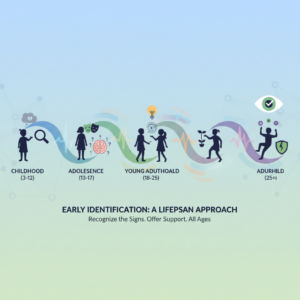
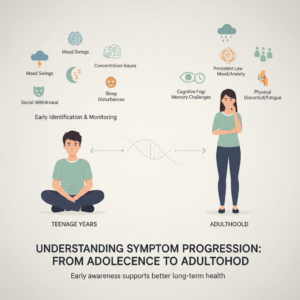
Mental health symptoms are not static. They can expand, shift, or become more defined as your teen grows into a young adult. Some patterns that appear chaotic in adolescence may become clearer diagnoses later on. Resources such as how symptoms evolve from teen to adult and identifying mental illness across age groups explore these developmental changes in more detail.
For example, a teen who shows intense emotional reactivity, sudden mood swings, and difficulty calming down may be experiencing early emotional dysregulation in teens vs adults. In adulthood, this might look more like chronic mood instability or specific mood or personality disorders. Similarly, subtle early anxiety in middle school could later develop into more recognizable panic disorder or social anxiety in early adulthood.
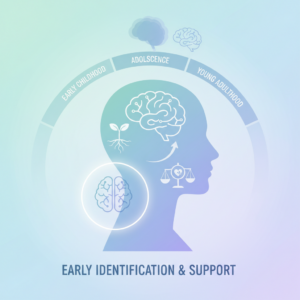
Understanding this trajectory is not about predicting a diagnosis. Instead, it helps you appreciate why early identification and support matter. Early care can reduce the severity of future symptoms and may change the course of your teen’s mental health into adulthood.
How you can support your teen’s mental health
You cannot remove all your teen’s stress, but you can create conditions that support resilience and recovery. Mental health promotion programs for adolescents focus on strengthening emotional regulation, building resilience, and creating supportive environments at home, school, and in the community [1].
You can support your teen by:
- Building an open, loving relationship rooted in trust, honesty, and respect
- Encouraging them to talk about confusion, stress, or worries, even when topics are uncomfortable
- Validating their feelings before offering advice
- Helping them maintain routines with enough sleep, regular meals, and time away from screens
University Hospitals emphasizes the importance of an open, trusting relationship and encouraging teens to talk about what is confusing or stressful for them [4]. Mental Health First Aid also encourages physical self-care, such as healthy diet and regular exercise, which have been associated with better mental health outcomes [3].
Social media is another area where your involvement can help. Since a large majority of teens use platforms like YouTube, TikTok, Instagram, and Snapchat daily, discussing how these platforms impact mood and self-esteem is important [3]. You can set collaborative boundaries around screen time and help your teen reflect on what content helps them feel better and what leaves them feeling worse.
If you are also supporting a young adult, it may be helpful to review early mental health symptoms in young adults and mental health red flags in young adults to better understand age-related differences.
When and how to seek professional help
Recognizing emotional distress in teens is only the first step. Acting on your concerns can feel intimidating, especially if you are unsure whether something is “serious enough.” A useful guideline is to seek help when emotional or behavioral changes:
- Persist for several weeks or longer
- Interfere with school, home, or relationships
- Involve risk behaviors, self-harm, or talk of death
University Hospitals notes that when parents observe concerning changes, beginning a supportive conversation is a crucial first step, and many distressed teens actually welcome the chance to talk [4]. Consulting your child’s doctor can lead to referrals for mental health professionals and more tailored assessment.
Treatment options may include therapy alone or therapy combined with medication, depending on the teen’s specific diagnosis and needs. Types of therapy are chosen by mental health professionals in collaboration with the family [4]. Programs like Youth Mental Health First Aid train adults to identify and assist adolescents experiencing mental health or substance use challenges, which can be a valuable tool for parents, teachers, and other caregivers [3].
If your teen’s distress is linked to a traumatic event or disaster, NIMH recommends creating a safe, calm, and supportive environment. Caregivers can reduce additional stressors, reassure teens, and communicate love and care, all of which strongly influence how youth respond to trauma [5]. For immediate crisis counseling related to disasters, SAMHSA’s Disaster Distress Helpline provides free, confidential support 24/7 at 800-985-5990 [5].
Additional resources such as SAMHSA’s Behavioral Health Treatment Services Locator, NIMH’s Help for Mental Illnesses page, and the National Child Traumatic Stress Network can help you find care in your area [5].
As you move forward, you may also want to explore how teen symptoms compare with adult mental health warning signs and signs of serious mental illness in adults. These comparisons, along with information on how anxiety shows up differently in teens and depression symptoms in teens vs adults, can give you a fuller picture of what your family is facing across different ages.
Recognizing emotional distress in teens is an ongoing process, not a one-time task. By paying attention to emotional, behavioral, and cognitive changes, and by responding with curiosity and care, you give your teen a better chance at early support and a healthier path into adulthood.